
Amorphis - Official Website - Interview - News
The Beginning Of Times |
Finland
 |
|---|
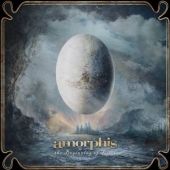

Type: Full-Length
Release Date: May 27th, 2011
Label: Nuclear Blast
Genre: Melodic, Modern, Rock
1.
IX
2.
Desert !
3.
Ilona The Very Best
4.
Misogynists
5.
Heaven's Jail
6.
Rob "Klister"
7.
The Derby
8.
No-Way
9.
The Vision Never Fades
1.
Battle For Light
2.
Mermaid
3.
My Enemy
4.
You I Need
5.
Song Of The Sage
6.
Three Words
7.
Reformation
8.
Soothsayer
9.
On A Stranded Shore
10.
Escape
11.
Crack In A Stone
12.
Beginning Of Time
13.
Heart's Song (Bonus Track)
Review by Greg on February 3, 2024.
Ah, the times when the energy of passion could fuel every means of transport. After the disappointing sales of The Final Separation, a label change and a local interest in metal which struggled to take off, Bulldozer took the bare minimum of time to rearrange their weapons and struck again with full force. Another year, another album: 1987 saw the release of IX, and things would never be the same.
IX is the logical conclusion of the maturational process carried through Bulldozer's first two albums: the sound has become almost pure thrash metal with an evil twist, and the typical Venom/Motörhead sound is by now largely abandoned. The title is still in typical Bulldozer fashion: quoting AC Wild, it was a reference to the ninth circle of Dante's Inferno, "the circle of treachery, where Lucifer, the rebel angel, stands together with Judas. The betrayers of the faith". However, such a complete evolution in style probably couldn't have been possible without the hiring of a new drummer. "Don" Andras left with a great performance on The Final Separation, but his substitute, Roberto Cabrini aka Rob "Klister", turned out to be the crucial factor for the overall IX sound: less fill-happy, but faster, and straight to the point.
This time, indeed, the title-track placed at the beginning wastes no time to sharpen the knives and let the listener know that Bulldozer are back, angrier, faster and more violent than ever. AC Wild's deranged voice is still fully recognizable, and his hatred towards religion fuels every second of this incredible opener, before Panigada decides it's time to slay his guitar for the first time in a long series and deliver a remarkable solo. The amount of sheer energy of this track alone can only be matched by how little one could expect Bulldozer to sound like this. Sure, someone still misses their brand of Venom-meets-Motörhead blackened speed metal which had been almost perfected on The Final Separation and now forsaken; but, as I said before, I do believe THIS is the music AC Wild intended to make, and the choice of the little experienced (in metal) label Discomagic helped. Also the production, though raw, is finally decent - take this, Roadrunner!
After the completely mid-paced 'Desert!', owned by a superb Panigada, the album begins to suffer a bit from the Reign in Blood syndrome, and tracks become shorter and faster as time goes. Nothing shocking considering that said album came to life an year earlier. However the choruses are often slower and can remain in your head after a while. So, as long as the fillers are good, nothing to worry about. For example, 'Rob "Klister"' is another song Bulldozer dedicated to their drummer, but this time it's a musically serious affair just like its neighbors, and it's rather one of the most intense thrashers they have ever written. Also, 'No-Way' starts essentially with a rehash of 'Rob "Klister"''s riff, and we can expect another speed-fest which wipes out mercilessly the needed mid-tempo break of 'The Derby', dedicated to soccer rivalry in their Milan. Yes, riffs are delicious, lethal and original like never before, yet it's thanks to songs like 'Desert!' and 'The Derby' that the members can showcase their abilities in a different way, breaking the constant barrage of high-speed attacks. Also the closer 'The Vision Never Fades' confirms our suspects that there are really no bad songs on here. IX really showed Bulldozer at their most inspired moment so far, no matter the tempo.
Oh, make sure you don't forget one of the band's hymns, the ode to pornstar and politician Ilona Staller 'Ilona the Very Best', because... well, it will be simply unforgettable from the first time you hear it. So, truth be told, one simply cannot go wrong with this album, as its running time of 31 minutes invites you to listen to the entire thing in one sit, and there are no songs longer than 5 minutes like before. It's a truly intense experience, maybe it's not a perfect album (but then, which one is?), but it's one of the best I've ever heard. The moment Bulldozer finally found their consecration... they would however strike only one more effort before putting a halt to their career. A sad ending, but the last demonstration that the Italian crew couldn't be further from being a one-album wonder...
Rating: 8.9 out of 10
1.61kReview by Felix on November 16, 2020.
Bulldozer’s third album, confusingly titled IX, was released in 1987, one year after The Final Separation and one year before Neurodeliri. Today we are happy that some bands need less than five years for a new full-length, but that’s another (dissatisfying) story. Yet in all honesty, the stories that Bulldozer tell on IX are not very appetizing as well. To glorify the possibility of putting a finger deeply in the ass of a porno slut or to praise the safer sex alternative called masturbation (“you won’t get a.i.d.s.”) imply a sexual frustration of gigantic dimensions. Of course, masturbation is sex with a person I really love, but this fact alone does not justify such totally idiotic lyrics. Not to mention 'Rob ‘Klister’'. Does anybody think that this kind of poetry is entertaining?
Let’s turn quickly to the music itself. Well, first of all, I am sorry to inform you that the production is more or less on a par with the lyrics. It has the power of a dick after two orgasms within the last 30 minutes. (I beg your pardon. Bulldozer’s lyrics have confused me.) Maybe due to a small budget, the guitars sound pretty thin and the snare drum has no impact as well. Thus, the voice of AC Wild is the most characteristic element and this dude cannot hide his biggest inspiration from time to time. Especially at the beginning of 'The Derby' he sounds like his venomous idol Cronos. By the way, this is another song with very strange lines that combine “Holocaust” with “Hooligans”. Does this form of lyricism make sense? Of course, not at all – but I wanted to write about the music.
IX offers ix pieces, but don’t expect any killer among them. The opening title track is fast and pretty expressionless, 'The Derby' seems to be written within five minutes in view of its simple football staccato and even the acceptable riffing of 'Desert!' has to face the enemy within when it comes to the moronic guitar line that appears for the first time after 86 seconds. 'Ilona the Very Best' has more than a modicum of momentum, but I guess this was the initial impulse that started the evolution which ended in “Yum Yum” and so I cannot enjoy the track whole-heartedly. Generally speaking, Bulldozer presents another portion of their speed/thrash cocktail, while the sporadic horror elements of the debut do not re-occur. The band does not lack energy and filth, but it is also true that their will to make noise was always bigger than their compositional skills. Songs like 'Heaven’s Jail' have a solid riff foundation, but the Italians fail to make a great track out of it and the stupid fade-out at the end of song illustrates the lack of convincing ideas – and you will find more fade-outs here.
The German metal media of the eighties hated Bulldozer and this alone was reason enough for me to like the trio. But juvenile opposition aside, I cannot deny that the evolution of the band between 1985 and 1987 was fairly questionable. IX is an under-average output of dirty metal, not totally bad, but with a significant lack of coherent song structures and creative substance. The playtime of less than 32 minutes says a lot in this respect. Maybe the dudes still had a finger or another part of the body in a natural orifice of a woman as they began to write this album. This would explain a lot.
Rating: 5.7 out of 10
1.61kReview by George on August 16, 2020.
With early death metal origins, an increased presence of folk and rock influences later on and more, Amorphis have never been an easy band to assign a single genre to. Nowadays they straddle a very strange line between prog metal, folk rock and melodeath, a niche that they've explored and refined over the last fifteen years since the introduction of Tomi Joutsen. Today I will review what might just be the pinnacle of this era and arguably even Amorphis overall.
I consider Silent Waters, Skyforger and The Beginning of Times something of a trilogy in Amorphis' discography, each being a concept album that deals with one of the three main characters in the Kalevala, the Finnish national epic. Both the preceding albums are amazing in their own right, with Silent Waters telling the stories of Lemminkäinen and Skyforger dealing with the great blacksmith Ilmarinen. But The Beginning of Times is on its own level entirely, where breathtaking storytelling, mystic melodies and Amorphis' magical composition converge to create a near-perfect experience.
The third instalment of the trilogy tells the tale of the great bard Väinämöinen, and the atmosphere is impeccable. The focus of the album is on wondrous, folky keyboard lines with very few overtly epic moments, but then again the Kalevala is not an epic text. Sure, magical duels, celestial wars and visits to the underworld are commonplace, but the book's true soul is in its poetic beauty and storytelling, reflected well by the sweet, flowing motifs that make up a large part of the experience.
The cynosure of the record is, without a doubt, Tomi Joutsen. His true versatility is not even on display here, but once again that's because it doesn't have to be. The desperate, harrowed side of him isn't necessary (although if you want to hear a man with such a powerful voice sound like he's about to collapse on the floor in tears I heartily recommend Hallatar), leaving just his storytelling mode. I don't think there's anyone else who could better represent a Bard with the power to infuse his songs with magic - his clean singing is even more passionate than ever before while he reserves his forceful growls for the more thematically intense sections such as Väinämoinën's rage in 'My Enemy'.
The album overall is a very logical progression from Skyforger, comprised mostly of simple, anthemic melodic rock songs such as 'Mermaid' and 'You I Need', which serve the atmosphere well with catchy riffs, powerful, memorable choruses and guitar solos aplenty, never overly technical but always emotionally resonant. But The Beginning of Times is at its best when it's combining those joyous leads with more complex, ambitious structures that give a true sense of progression and storytelling. This occurs most notably in 'Song of the Sage', which is really a convergence of every single element that makes the album great and more - it sets the scene with soaring twin melodic lines from a guitar and flute, both coming together for one of the most evocative choruses on the album. The duality between the instruments is perfectly reintegrated later on in a series of atmospheric solos - it's quite a simple concept but Amorphis execute it to perfection, squeezing every last drop of raw beauty they can out of each and every melody they write.
And that is, to me, the best way to describe this album. It's a series of very simple ideas taken to their very limits and executed to sheer perfection. The band aren't reinventing the wheel in terms of any particular songwriting devices, but there's still a characteristic individuality in the unorthodox blend of genres they present. Every moment is brimming with passion, imagination and sheer artistic vision and the result is captivating.
In the end, The Beginning of Times is a near flawless album that I have just one complaint about. There's a singular point around the middle of 'On a Stranded Shore' where I begin to feel it's overstaying it's welcome. It happens on every listen without fail, but fortunately Amorphis have always managed to recapture my attention with the beginning of 'Crack in a Stone' (a song that introduces yet another new element with a beautiful integration of choirs). However, just for that one small moment where the inclusion of 'On a Stranded Shore' begins to feel unnecessary, I'm forced to deduct a single point from the album. Ultimately though, this one little blemish is nothing compared to the creativity the rest of the album oozes. It manages to be distinctly Finnish in atmosphere even while defying the melancholic conventions of the band's contemporaries, and while the core ideas behind the music remain the same for the whole duration the subtleties and details are constantly shifting which keeps the experience fresh and memorable. With each track we're introduced to a new mood, a new story, a new landscape to be explored, and that is what makes The Beginning of Times such an incredible record. This is Amorphis at their peak.
Rating: 9.9 out of 10
1.61k