
All That Remains - Official Website
Behind Silence And Solitude |
United States
 |
|---|
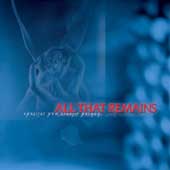

Type: Full-Length
Release Date: March 26th, 2002
Label: Prosthetic Records
Genre: Hardcore, Heavy, Melodic
1.
Behind Silence And Solitude
2.
From These Wounds…
3.
Follow
4.
Clarity
5.
Erase
6.
Shading
7.
Home To Me
8.
One Belief
Review by HanSathanas on May 4, 2026.
Pouring their passion into the music they wrote, All That Remains started off with a rather promising debut in this album. A lot of people became acquainted with the band after their song 'Six' from All That Remains "The Fall Of Ideals" was included as a playable track in the video game Guitar Hero II. As a result, a whole new generation of younger fans—some rooted in the emo scene—began embracing All That Remains, and it’s easy to see why. While that exposure gave much-needed publicity to a band operating within the metalcore scene—somewhere between emo, hardcore, and the more commercially accessible corners of heavy music—people seem to have selective memory when it comes to this debut record. That, too, is not hard to understand.
Branded as melodic death metal, All That Remains "Behind Silence And Solitude" is a competent offering from start to finish. While I also once jumped on the bandwagon of criticizing the band’s later material after All That Remains "The Fall Of Ideals", their debut is something else entirely. The opening title track is a strong example of how melodic death metal had taken on a life of its own, with clear remnants of the Gothenburg school still present in its genetic roots. The dual-guitar melodies and occasional pinch harmonics do more than simply fulfill genre expectations—they actively shape the atmosphere. While the riffs aren’t especially groundbreaking, the songwriting hints at what the band would later become. It carries the harmony of its Swedish influences but with an American death metal edge, creating a sound that exists in a very specific moment in the band’s evolution.
Aside from their later mainstream success—which, unsurprisingly, coincided with a perceived decline in songwriting—the sound of this album is generally rustic and somewhat forlorn. Clean guitars, both electric and acoustic, are scattered throughout several tracks. While they can be surprisingly memorable, especially in songs like 'Clarity', the songwriting often undermines the intended atmosphere, limiting its lasting impact. 'Erase' opens with clean electric guitar layered over cold wind effects before shifting into somewhat clichéd riffs that feel serviceable rather than inspired. The solos often come across as a box-ticking exercise, fading quickly into forgettable passages.
A similar approach appears in 'Home To Me', which features a mid-section of clean guitar work with a slightly funky melodic edge before returning to standard distorted leads. The solo sections continue until Phil Labonte’s vocals return, but despite these elements, the track remains less memorable than expected. Tremolo-picked riffs appear throughout most of the album, and the closing track 'One Belief' is no exception, built around palm-muted chords at a mid-paced tempo that never quite reaches true aggression. Bassist Dan Egan’s contributions largely follow the rhythm guitars, serving more as support than a distinct voice.
'Follow' stands out as one of the stronger tracks, featuring some of the better riffs on the album. The mood shifts briefly before returning to a more youthful, angsty energy in the verse sections. It’s also one of the few songs where blast beats are used effectively, though only in short bursts. This raises the question of whether blast beats even belong on this album at all. In 'Follow', they don’t feel out of place, but their presence is fleeting. Overall, the drumming is restrained and conventional—functional, but rarely adventurous. Michael Bartlett never really gets the chance to push beyond the basics, or perhaps simply chooses not to. It wouldn’t be until All That Remains "The Fall Of Ideals" that Shannon Lucas—later known for his work with The Black Dahlia Murder—would take over behind the kit.
Even in 'One Belief', the blast beats serve more as a brief structural accent than a meaningful compositional element. The production does, however, capture a slightly nostalgic 90s-style drum sound, particularly in the stereo placement of the snare and cymbals.
The vocals are quite different here compared to later releases. Phil Labonte’s death growls are inconsistent—sometimes effective, sometimes not. While it’s commendable that he sticks to his own approach, the delivery can be hit or miss, whether in screams or growls. There are no clean vocals on this record, which, in this case, may actually be a positive. If the harsh vocals aren’t fully convincing yet, introducing cleans would likely have made things more uneven. The raw, underground production also doesn’t seem suited for the kind of clean vocal style the band would later adopt.
It’s not a great record by any stretch. Had it not been for the band’s later popularity, it likely wouldn’t receive much attention today. Still, this is where All That Remains began—clearly searching for direction. The album reflects that uncertainty well. The band members were still relatively new to the scene, aside from Phil Labonte and Dan Egan, both of whom had prior experience in projects such as Shadows Fall and local death metal acts like Exhumed (not the more well-known band of the same name).
Every band has a humble beginning, and All That Remains "Behind Silence And Solitude" is exactly that—a rough, overlooked starting point for a band that would later find far greater success. Should you listen to it? There’s no harm in it. If you’re curious about the band’s origins, it’s worth a spin. Just don’t expect much that truly sticks.
Rating: 6.5 out of 10
1.21k