
Isvind - Official Website
Dark Waters Stir |
Norway
 |
|---|
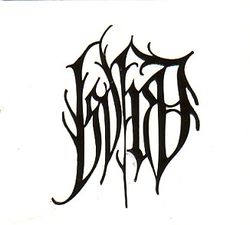

Type: Full-Length
Release Date: 1996
Label: Solistitium Records
Genre: Black
1.
|ntro
2.
Ulv! Ulv!
3.
En Gjennområtnet Hytte
4.
Stille Sjel
5.
Lysningen I Skogen
6.
Dark Waters Stir
7.
As Rane Comes Down
8.
Bankeånd / Poltergeist
Review by Felix on April 20, 2025.
For me, the eighties are the golden decade of metal and the decade of my youth. Bad enough when you consider that the year is 2025. For some younger fans, especially those who love this genre called black metal, the real classics were published in the nineties and everyone who has ever lend an ear to “De Mysteriis Dom Sathanas” understands their position as well. Okay, Isvind’s first full-length “Dark Waters Stir” has not much in common with albums the scene calls the classic ones, but it takes the audience back in time and back to the roots. In a nutshell: Oslo, 1996. Unfortunately, to listen to this work is more ambivalent than expected.
Isvind’s debut stood out in all catalogues printed at the time due to its white design. That’s not the only unusual component. The digipak comes without a booklet and delivers almost no information but the song titles. But let us leave these side aspects behind. “Ulv! Ulv!”, the first regular track after the intro, blows the typical Norwegian cold into the room. It reminds me a bit of “Svartalvheim”, the first album of Ancient, although it presents a harsher and rawer style of the genre. But the feeling is as nineties as possible and I guess that’s the connecting element. Gorgoroth and Darkthrone have been a source of inspiration for Isvind as well, not only in terms of style, but also with regard to the production. It is dull, it is rumbling, it is not differentiated. During the high-speed parts, the mix appears additionally blurred and nearly opaque; the drums are nothing but a distant knocking in the background. This technical execution makes the album to a foggy experience. That’s cool during the first songs, but as the album progresses, I cannot suppress the suspicion that the lack of any nuances plays a part in the fact that a certain monotony is spreading. Or is that just down to the song material, which perhaps doesn't meet the highest standards?
As is so often the case, the truth is probably once again in the middle. I'm sorry if that sounds a bit boring, but that's just the way it is. “Stille sjel” illustrates the little dilemma of the album. The opulently constructed song houses some exciting parts which feature high velocity, straight rhythms, raging guitars, and grim curses of the lead vocalist. But all in all, the track cannot fully justify its length of nearly seven minutes and the odd production as well as a few less convincing, relatively mild part,s contribute to this not absolutely convincing result. Another naturally born representative of the album, the title track with its bombastic playtime of ten minutes, also does not manage to make my day. It is partly repetitive and it lacks outstanding moments. Not to mention the lame, sorry: atmospheric outro, before the more or less hidden track shows up. Separated from the rest by some a few minutes of silence, it is almost a pity that it is not a regular part of the album, because its contours are pretty clear and the main guitar line is not so bad. Nevertheless, the vocals suck and the ending of the song is as unspectacular as the entire work. Even Oslo 1996 did not deliver only unclouded happiness.
Rating: 5.7 out of 10
1.27k