
Marras - Official Website
Where Light Comes To Die |
Finland
 |
|---|
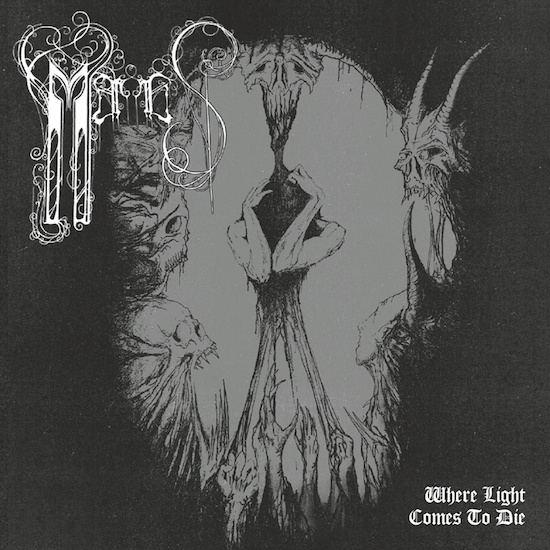

Type: Full-Length
Release Date: November 18th, 2019
Label: Spread Evil Productions
Genre: Black
1.
Prologi (Guidance)
2.
Overture Of The Lonely Journey
3.
Lifeless Sculptures
4.
Prologi (Faith)
5.
Sea Of Trees
6.
Prologi (Damnation)
7.
Transition Of The Lightless Path
9.
Prologi (Desolation)
10.
Chamber Of Penance
Review by SzejkElRopa on October 4, 2026.
I have to admit something. Unlike others, I wasn't introduced to black metal by the 80s or 90s classics, and one of my earliest discoveries in that very genre was Marras' "Where Light Comes To Die". Why, you might ask? If you, like me, discover music mostly on YouTube and don't have money to acquire all the CDs you want (still, support the underground!), you probably know Black Metal Promotion channel. This very album was highlighted on its main page quite a while ago, and when I was carefully dipping my fingers into this wicked musical universe, I eventually stumbled upon it. And no, it didn't mesmerize me, nor did it change my life. It rather put me off, because of the sinister aesthetic and uncanny intro. Now, when I know at least something about the vast world of black metal, I could come back to it.
The first observation I had to make is that there are only four "real" black metal songs, and the other six are either some ambient introductions/interludes with a repeated motif of some speech or simply atmospheric instrumentals. For me, it isn't necessarily a big problem; however, I'd like to have heard more of what Finns have to offer, because their imagination certainly isn't limited to four outputs. Aggressive, dynamic riffs usually lead the songs, accompanied by vehement vocals, and certainly make for great material. "Lifeless Sculptures", for example, features quickly changing riffs and subtle keyboards, which greatly build tension and atmosphere, evoking the feeling of unrest and fury. Sure, those songs aren't anything groundbreaking, and the same can be said about the production, which alludes to the most well-known classics of the genre. "Sea of Trees" slowly builds tension, and later on unleashes it with heavy and dynamic riffing. Moreover, its middle section is extremely emotional, with a melodic, piercing riff leading the song. Worth noting is the chorus, which incorporates both shrieks and growls, which makes it memorable. Also, despite the album's number of instrumentals and interludes, everything makes sense, and it is felt that this album has an idea developing throughout it. For instance, "Prologi (Damnation)" starts with a melancholic, dare I say, depressing guitar melody. Later on, "Transition of the Lightless Path" slowly yet steadily builds tension - first with a guitar riff, then with triumphant-sounding keyboards, which slowly set up the introduction to "Where Light Comes to Die", another full-force sheer black metal attack. Although it is easy to lose track of everything with all those instrumentals, the guys did a good job connecting all the dots. The overall mood changes from depressive and melancholic to more furious and volatile, yet it never loses the idea of what it wants to convey.
As I mentioned earlier, there are two types of vocals, and as far as I can tell, there is only one person responsible for all of that. H doesn't do anything new, yet no one can accuse him of being generic, since using two different vocal techniques isn't that common. Songs are built over classic black metal riffing, at times tremolo-picked and used in the more memorable moments, as well as heavier riffs usually accompanied by rapid drumwork. Tragic, haunting melodies are fantastically crafted, undoubtedly easily falling into memory. Take a look at the closer - "Chamber of Penance" - which incorporates, maybe on the one hand, something known for ages; on the other hand, however, looking at the emotional side of it, it definitely comes across as an introspective journey into one's biggest fears, without sounding overly melodic or blatantly stolen from somebody else. Also, the sudden slow-down of the song and the final outburst cannot be omitted, since it marks the end of the album, also using alarming melodies and vocals, which sound as though H were tortured. Speaking of other instruments, the drums are pretty varied, switching between rampant blast beats (as in "Chamber of Penance") and rarer mid-tempo moments. The bass is, despite the harshness of production, at times audible; however, its absence isn't necessarily the biggest problem.
"Marraskuu" means in Finnish "November", and altogether "The month of dying", and I think "Where Light Comes to Die" is a great album for the upcoming weather. This album serves as a great place to reflect on what has already been lost and the inevitability of death. It is a great album, operating with a variety of emotions and crafting a whole story that is bound to stay in your memory. Therefore, I give it 8.7/10. Listening to this output was a pleasure; however, I wish there were more straightforward black metal songs, because after each listen, a craving for more has been left in me.
Rating: 8.7 out of 10
1.50kReview by Felix on October 1, 2019.
Finland is the country that never sleeps when it comes to black metal. Marras is another new band from this subgenre hot spot, but this is not to say that the musicians under this banner are newcomers as well. However, their debut should not be ignored. Of course, the flood of new releases never stops, neither in Finland nor on a global scale, and I cannot say that Where Light Comes to Die brings something completely new. Honestly speaking, some parts are anything else but innovative.
Firstly, the beginning of “Overture of a Lonely Journey” is, despite or even because of the harsh guitar tone, almost a copy of some meditative sounds a man called Varg Vikernes once created. Guess that the protagonists would have been well advised to select another title for their debut, because already its name makes me think of “Hvis lyset tar oss”. Secondly, “Transition of the Lightless Path” seems to take us to Blashyrkh, especially the first guitar tones, before it changes to heroic fanfares that because Rob Darken sleepless nights. One could give more examples, but I must also mention that all these “cross-references” do not have a negative impact on the overall impression. The material portrays different facets of the black genre, sometimes pretty soft, sometimes diabolically vehement, sometimes somewhere in-between. This is not that kind of thunderstorm from beginning to end that many other representatives of black metal prefer. Marras, this almost appears as an ironic twist of fate, try to go their own way, although they pick up some notes from the heyday of the Norwegian role models.
The album does not suffer from a lack of substance and it is not prone to repetitiveness. The band has a knack for the right configuration of the songs. They come to the point without presenting boring sequences and without being cut too soon. I am no big fan of movie samples, especially when it comes to the rather naturalistic black genre, but here they do no harm. The album is characterized by its different moods and the melancholic sequences are as interesting as the outbursts of aggression. Many instrumental sections, some of them with keyboards, show up and that’s not bad, because the overly distorted voice leaves a quite ambivalent reverberation. Nevertheless, Marras have enough quality to challenge their well-settled competitors in view of the sinister song material. The tracks are either atmospheric and baneful or dynamic and furious, but always intense. In addition, fillers have not been recorded and so the single songs form a strong unity. And it’s surely needless to say that the typical trademarks of the genre, for example some icy guitars, are not missing.
Time will tell whether or not Marras will be able to record not just a promising debut, but to leave broad tracks on the ice-cold ground of Finnish black metal. There is still some open space besides Horna, Azaghal or Behexen. Marras have the compositional competence to catch up with these names, but they will need a big portion of stamina and less prologues – four or actually six out of ten tracks are just interludes. I admit that almost all of them add value to the album which scores with a cruel yet voluminous, but first and foremost the four “complete” songs whet the appetite for more. Only the Immortal-Graveland-bastard “Transition of the Lightless Path” is on a par with these tracks. However, I recommend giving this album a fair chance. Already the Finnish origin alone is a seal of quality, isn’t it?
Rating: 7.5 out of 10
1.50k