
As The Palaces Burn - Interview
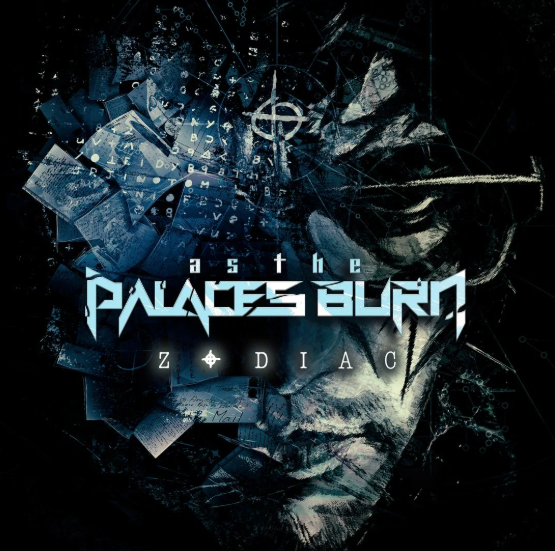
With "Zodiac", As The Palaces Burn take a decisive step forward in their career, solidifying themselves as one of the most consistent forces in Brazil's modern metal scene. Released in November and already posting impressive numbers across digital platforms, the album reflects a moment of full artistic maturity for the band from Santa Catarina, combining heaviness, technical skill, and emotion within a contemporary, cohesive, and aggressive sound. Produced by Adair Daufembach and recorded at top-tier studios in Brazil, Zodiac is not a concept album, but it stands firmly on its strong sonic identity and on songs that flow together with intensity, purpose, and cohesion.
In this exclusive interview, vocalist Alyson Garcia dives into the behind-the-scenes process of creating the album, detailing the songwriting approach, the choice of track order, the impact of Daufembach's production, and the importance of recording in a facility like Elephant Studio. He also discusses the trust-based relationship with the producer, the technical and artistic contribution of drummer Gilson Naspolini, the decision to address dense themes such as the Zodiac Killer case without resorting to sensationalism, and the band's next steps following the release.
Marcelo Vieira (@marcelovieiramusic)

"Zodiac" is an ambitious album and marks a phase of maturity for As The Palaces Burn. What does it represent as a turning point for you personally?
Zodiac was the moment when I felt we managed to bring everything together in the right measure: more straightforward songs, stronger choruses — which are actually a hallmark of the album — and a modern sound. For me, it's our best work so far, a synthesis of what ATPB really is.
Even though it's not a concept album, the record presents a clear sense of cohesion that listeners notice. How did you define the track order?
We did that by listening to the album a lot as a whole. We weren't thinking about a single overarching concept, but rather how each track connected emotionally with the next. The sequence came from that search for flow, almost as if the songs were having a conversation with one another.
Why did the song "Zodiac" end up giving the album its name?
It was the last song to be written. Gilson brought it in with a very well-defined theme, which added a new color to the album. We liked it so much that we expanded the concept into the artwork as well. The song opens the album in a subtle and unexpected way, before the heavier and faster sequence kicks in. It was a strategic choice to give the record a strong identity.
The song addresses the Zodiac Killer case. How did you balance dealing with a real and violent subject without crossing ethical boundaries?
The idea came from Adair, who suggested a strong and contemporary theme to complete the tracklist. Coincidentally, shortly afterward Netflix released a documentary [This Is the Zodiac Speaking (2024)] about the case, which reinforced the timing. But we never wanted to glorify anything. The approach is more atmospheric and psychological, not sensationalist. The case is already part of American popular culture, so we treated it with a certain symbolic distance.
The album blends traditional heavy metal, thrash, and modern elements. What changed the most compared to your previous work?
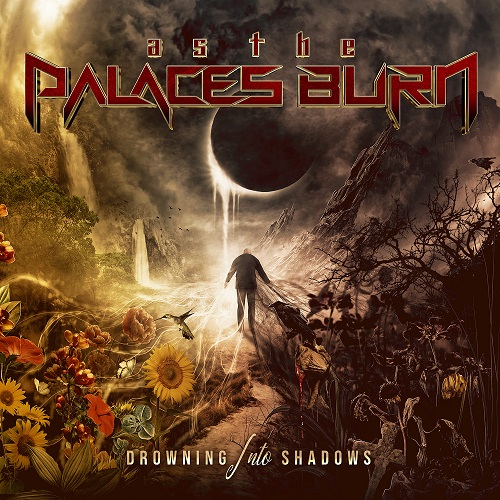
We're in constant evolution. Drowning Into Shadows (2023) already pointed toward a more atmospheric and modern direction. Gradually, we opened ourselves up to more layers, dynamics, and experimentation. That shows up in the vocals, arrangements, and production. And of course, a lot of that comes from Adair's contribution.
Do you believe that this balance of heaviness, technique, and melody helps expand the band's audience?
Absolutely. That's the ideal trio. The new songs were designed in a more direct way, with structures that we realized — over the course of our releases — work better for the band and receive a great response. Everything happened very naturally. Diego [Bittencourt, guitarist], our main songwriter and artistic director, once again did an excellent job. We hope the audience connects even more deeply with ATPB.
How does the balance work between individual ideas and the band's signature sound?
Usually, Diego brings in the themes, structures, and lyrics. From there, everyone starts contributing. Many songs already arrive quite well developed. Both on the previous album and on Zodiac, after that first draft, Adair steps in to refine everything until we reach the final recording versions.
Did recording at Elephant Studio bring any special influence for you?
Definitely. Elephant is one of the largest studio facilities in Brazil, with state-of-the-art equipment and a complete environment — basically a studio-hotel. On top of that, many major artists have recorded there, so being in that space only increased my motivation to deliver the best possible performances.
You've maintained a long partnership with producer Adair Daufembach. What does that change in practice?
It changes everything. Adair has been our friend since our teenage years and knows each of us deeply. He knows when he can push harder and when he needs to respect the band's instincts. That speeds up the process and greatly elevates the final result.
During the recordings, was there any suggestion from him that changed the direction of a song?
We left the album's production entirely in his hands. Especially in the vocal department, there are always many creative moments when I'm in the booth. We achieved incredible results in details and transitions. I already come prepared for him to 'draw blood from my throat' [laughs].
Gilson Naspolini significantly raised the band's technical level. How does that reflect in the final result?
Gilson is a complete musician — producer, drummer, and multi-instrumentalist. From the very beginning, he brought more plurality, organization, and quality to the musical direction, in addition to being an extremely versatile drummer. That strengthens ATPB's sound immensely.
The release event in Santa Catarina was special. How did you experience that moment?
It was truly memorable. We celebrated the release at a pub in Criciúma (SC), with screenings of the videos for 'Defying the Power' and 'United Obsoletion', supported by 92FM, sponsors, friends, family, and the audience. It was the perfect crowning moment for all the work surrounding Zodiac.
Now that "Zodiac" has been released, what are the next steps?
To expand. Make the most of the feedback, play select shows, and hit the road, taking ATPB to the next level.
 2.17k
2.17k
Upcoming Releases
- Gast - Förbannelser - Jul 31
- Taake - En Skog Av Nidstang - Jul 31
- Hexorcist - Crucificial Imprecations - Jul 31
- Horrifier - Revelations Of Gore - Aug 07
- Spectr3 - A Procession Of The Dead - Aug 07
- Megascavenger - Toxic Noxious Undeath - Aug 13
- Noveria - Becoming After - Aug 21
- Flotsam And Jetsam - Rats In The Temple - Aug 28
- Sworn - Null Crowned The Infinite - Sep 04
- Sněť - V Bažinách Vědomí - Sep 10
- Godslave - Godslave - Sep 11
- Terrestrial Hospice - Omnicide - Chapter I - Sep 11
- Neolith - Inbir - Sep 12
- Blodtår - Monark - Sep 18
- Runemagick - After Chaos: Nocturnal Vigil - Sep 18
- Game Over - When Darkness Falls - Sep 18
- Revel In Flesh - Flesh For The Kult Of Death - Sep 18
- Wharflurch - Mycodeath And Rebirth In The Outer Clusters - Sep 25
- Noctule - Extinguish Thy Flame - Sep 25
- Messier 16 - Shouts From The Cliffs Of Heterodoxy - Oct 23