
God Against Humanity - Interview
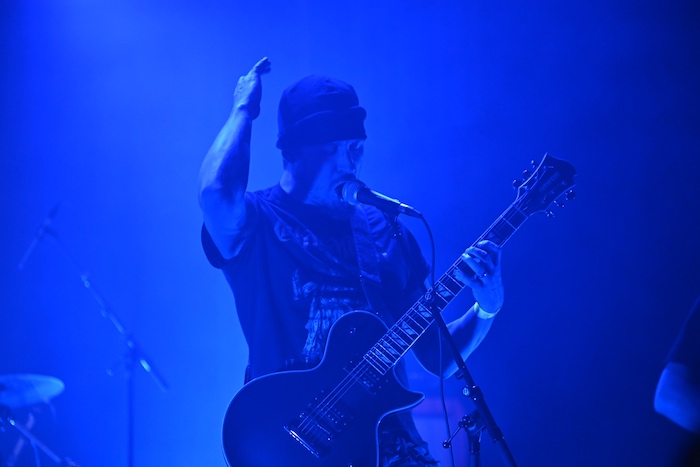
Rising from years of persistence and creative evolution, God Against Humanity stands as the culmination of a long and determined journey. Founded by guitarist and vocalist David alongside drummer Simon, the band represents their second attempt at building something lasting after earlier lineup struggles. With the eventual addition of Benjamin on second guitar and Maxime on bass, the group solidified into a stable unit that has now been together for six years - long enough to refine their identity both on stage and in the studio.
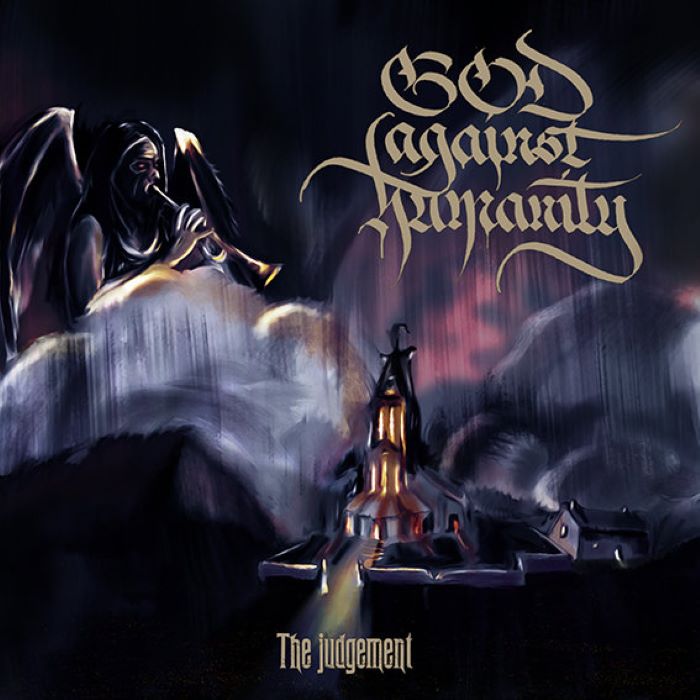
Their debut album, "The Judgement", captures the essence of a setlist that has matured through four years of live performances. What began nearly eight years ago with a single song written before the band even formally existed has grown into a fully realized body of work shaped by collaboration, patience, and shared vision. Initially rooted more deeply in black metal, the band's sound gradually evolved into something heavier and more grounded in death metal, with lower tunings, weightier vocals, and a more refined sonic approach guided by a "less is more" philosophy.
Lyrically, the album navigates the harsh realities of the modern world through allegory and poetic imagery rather than overt political positioning. Drawing on themes of societal tension, personal isolation, and existential reflection, "The Judgement" - inspired by the tarot card of the same name - confronts humanity's tendency to look outward for blame rather than inward for accountability. Recorded entirely in a DIY fashion, often under challenging and unconventional conditions, the album preserves the raw, live energy that defines the band's character.
With this release, God Against Humanity closes one chapter while already moving toward the next. If "The Judgement" serves as a document of where they have been, it also signals a shift toward a more melodic yet still dark and intense future — one that promises growth, exploration, and perhaps new roads beyond their borders.
Tomek

How did the band come together, who plays in it, and when did the whole thing start?
The band was formed by me (David) and Simon (drums). We had been trying for some time to build a stable lineup, with more or less success. God Against Humanity is our second attempt. Once again, it took some time to find a solid and stable lineup. Eventually, Benjamin (2nd guitar) and Maxime (bass) proved to be the right people. The current lineup has existed for about six years.
How did you decide on the band name? Is there a story behind it?
The goal of a band name is to be unique (which isn't that easy when you consider how many active or inactive bands exist on the planet), and also to have a name that stands out with a strong meaning. There isn't a very precise idea behind it, except for a name that approaches most of our lyrical themes in a mystical way — namely, the harsh reality in which humanity lives.
When did you start writing the material, and how long did it take?
I wrote the first song about 7 or 8 years ago, before the band even existed. I composed it in around two hours; generally, I don't take much longer than that to write the basic structure of a song. After that, it's like wine — it needs time to age and improve.
All the songs are written following the same process: I write a first draft with the complete structure, then everyone adds their own spices and transforms it into the final result.
What does this first album represent for the band?
It mainly represents a setlist that has followed us for four years while the band has been playing live. It was time to seal it forever in an album. It is therefore the end of a chapter, and the second one is already well advanced in terms of writing.
Was there a clear vision for the sound from the beginning? How did it evolve?
At the beginning, we were much more black metal, even with the idea of having keyboards everywhere. But eventually, the sound became heavier, leaning more toward death metal. The guitar tuning went from E to B, and the vocals became less shrill and heavier. It all happened naturally.
Which song was the hardest to finish — and why?
Not really. There were never any technical challenges imposed. It's better to stay in your comfort zone to feel as comfortable as possible
Is there a track that best represents who you are right now?
Horizon, the last song written, announces a shift toward a more melodic death metal direction. At this point, there are already three rough drafts of new songs. They are more live-oriented and more energetic, with catchier riffs and less of a dreamy feel — while obviously keeping that dark and depressive side. We also tried to strip the sound down and make it more refined, following the artistic principle of "less is more," removing the superfluous to focus on what really matters.
Did anything unexpected happen during recording?
Nothing special, except that Benjamin had to sleep for two hours in his car because he was stuck 5 km from my place, where he was supposed to record, due to a bicycle race — the Tour de France.
Are there any risks or experimental elements on the album?
Not really, apart from a few arrangements. The songs had been played live so much that we improvised very little. Still, there are some small, previously unheard gimmicks here and there.
Are the lyrics personal, fictional, political, or a mix?
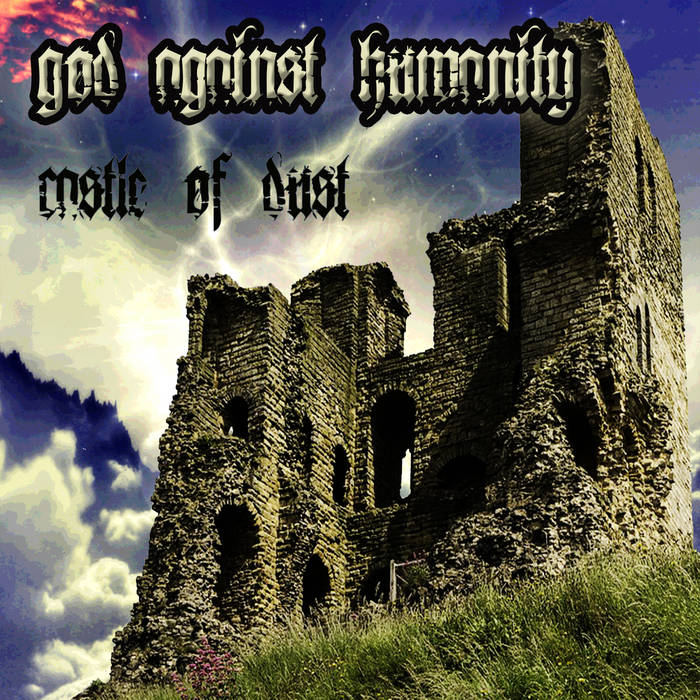
Most of the songs deal in an allegorical way with current societal issues. However, there is no taking sides, as there will never be any political stance from us. The lyrics are also somewhat personal — Castle of Dust, for example, talks about isolating yourself in a bubble to cope with the stress of the outside world. We believe that music should be something fantastical and imagistic, and that reality needs to be interpreted through poetry.
Is there a concept tying the songs together?
Yes, as mentioned above, the issues of our world. The album is called The Judgement, in reference to the tarot card. It depicts humanity facing God, facing itself — or rather the act of blaming God so as not to take responsibility.
What do you hope listeners take away after hearing it?
We don't have greater ambitions than hoping to offer the listener a pleasant moment that helps them disconnect a little from harsh reality.
Where did you record the album, and why did you choose that studio? Did you work with a producer?
The album was made entirely in a DIY way, with very limited resources. It was recorded at home in my humble home studio, and mixed and mastered by our friend Wicket at the Wicket Factory (Arras), who also brought his own touch to the album. He mainly works with post-rock, pop, and grunge, and gave the album a very "analog" feel — warm, slightly garage-like — which I absolutely love.
What was the biggest challenge in making this record?
Doing all of this ourselves, with very little means, was the biggest challenge. As an anecdote, the vocals were recorded between mattresses, by building a makeshift isolation booth to avoid any reverb, using a very cheap microphone, and in 32-degree heat. The vocals were recorded in a very live, no-cheating way, to stay as close as possible to the band's live energy. Sometimes you need special conditions to capture a specific emotion ;)
What are your expectations for this release?
The goal is first of all to seal the set we've been touring with and to turn the page toward new compositions. It might also allow us to tour a bit more outside our borders and go on a bit of an adventure. Once again, many thanks to MetalBite for taking the time to support our small band, and thanks to its readers as well. Hopefully, we'll be back soon with news about the next album.
 1.79k
1.79k
Upcoming Releases
- Blodtår - Monark - Sep 18
- Game Over - When Darkness Falls - Sep 18
- Revel In Flesh - Flesh For The Kult Of Death - Sep 18
- Runemagick - After Chaos: Nocturnal Vigil - Sep 18
- Garota - Strąceni W Ciemność - Sep 18
- Tombstalker - Chaos Monolith - Sep 24
- Massteron - Second In The Spheres - Sep 24
- Draugr - Ahnenfeuer - Ginnungagap Chaos Pt. I - Sep 25
- Wharflurch - Mycodeath And Rebirth In The Outer Clusters - Sep 25
- Noctule - Extinguish Thy Flame - Sep 25
- Stellar Silence - Expeditio - Sep 25
- Critical Defiance - Rivers Of Blood - Sep 25
- Eternal - Conspiracy Of Warheads - Sep 28
- Deconsekrated - The Inexorable Transcendence Of Death - Oct 02
- Amon Amarth - The Allfather Awakens - Oct 02
- Mørkgrim - Sǫgur Frá Norðfirði - Oct 02
- Hell-Born - VII - Oct 09
- Insomnium - Netherworlds - Oct 16
- Night Hag - Great Dismal Darkness - Oct 16
- Master - Among The Seeds Of Death - Oct 16