
Castrator - Interview
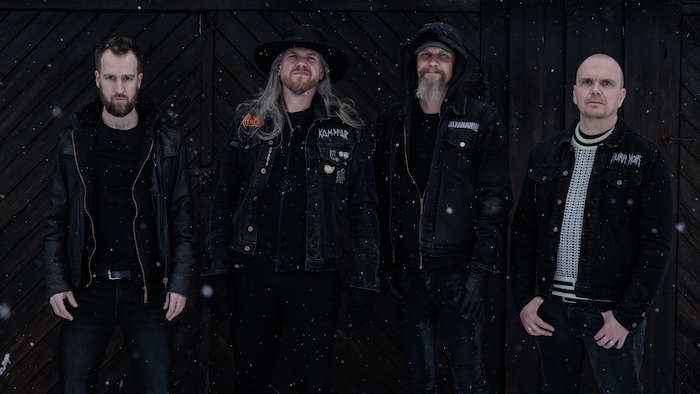
To avoid any misunderstanding, before diving into the questions, I started the chat with Dolk (stage name of vocalist Per-Joar Spydevold) with something seemingly simple: what is the correct pronunciation of "Kampfar"? With that question answered, I was able to move on to more substantial topics, such as expectations surrounding the band's first visit to Brazil — for a single show on May 31st at Manifesto Bar in São Paulo —, plans for the successor to Til Klovers Takt (2022), already in an advanced stage of production, and even having him choose, under the Norwegian spring sun, the five most important albums of his life. Enjoy the read!
Marcelo Vieira (@marcelovieiramusic)

What, for you, distinguishes a standard black metal show from a Kampfar performance?
That's a good question, because there isn't really such a thing as a "standard" in this context. What we do in Kampfar has never been standard compared to the rest of the black metal community. Even though we come from the early '90s and are strongly connected to that era, what we do has always been something different—perhaps not aligned with the traditional way of thinking within black metal.
For me, it's about something more personal. It's about individual feeling. Of course, the black metal attitude and emotional core are still deeply connected to the band and to me personally. But ultimately, Kampfar is best experienced live. That's where we truly belong.
We've never really been a typical studio band—although we've improved in that regard over time. For us, it's about being out there, performing live. That's where we bring out the best in ourselves as individuals. It has to feel honest and real—that's the most important thing.
This tour celebrates different phases of your discography. How do you build a setlist that works as a narrative rather than just a sequence of songs?
That's definitely a challenge. When you've been active for nearly three and a half decades and released nine albums, putting together a cohesive setlist is no small task.
Some fans are deeply connected to the early material, while others relate more to the newer work. I've met people at Kampfar shows who grew up with the band because their parents introduced them to it, and I've also met very young fans—14 years old or even younger—who discovered us more recently.
That, to me, is the essence of Kampfar: the ability to connect generations. To bring together people who could be father and son through the same music.
When we did our 30th-anniversary shows in Europe, we made a conscious effort to weave our entire history into a single performance. It was a difficult task, but I think we managed to create a kind of flow—a journey through time. That's how we approach it now as well: we don't focus only on the old or the new; we connect everything into one continuous narrative. It's not easy, but I believe we've succeeded.
In a one-off show in a more intimate venue like Manifesto Bar, the experience tends to be more direct and visceral. Does that change the way you perform?
In a way, it does—but not by changing what we are. The core idea remains the same: to connect everything we've done into a cohesive experience.
Whether it's a large festival or a small, intimate venue, the challenge is still to present that full narrative—to reach both longtime fans and newer listeners in the same space. The intimacy of a smaller venue might make the experience feel more immediate and intense, but the philosophy behind the performance doesn't really change.
Is there any song that takes on a completely different meaning when performed live compared to its studio version?
Yes. A good example is "Det Sorte," from Ofidians Manifest. It's the final track on that album, and it's extremely personal to me.
The song deals with very dark thoughts—I was reflecting on my own existence, even questioning whether I wanted to continue living. At the same time, during the recording process, our guitarist lost his father. So the song became this kind of shared emotional space—a dark bubble we had to work through together.
Even today, performing it live gives me chills. It's deeply personal, and that essence remains very strong every time we play it.
Did you face depression?
Yes, absolutely. That's exactly where the song came from. It's a very direct answer—I was at rock bottom, to be honest. That's the origin of it.
There's a common idea that Latin audiences are more emotional and intense. Does that perception match your real experience on stage?
We haven't had the chance to properly tour South America yet, which is a shame after more than three decades as a band. However, we have played several shows there, especially in Mexico, including major festivals.
So I don't have a full basis for comparison, but I've met many South American fans over the years. Recently, for example, I performed a tribute to Darkthrone at the Inferno Festival, and I met fans from South America there as well.
You can feel how much it means to them—and that means a lot to me too. Finally getting the chance to play in South America after all these years will be very special for us. I hope it will be just as meaningful for the audience.
Is there any cultural contrast between the band's Nordic origins and its South American reception that you find particularly interesting?
Yes, definitely. I grew up in the 1970s, and back then, Latin America felt very distant—almost unreachable. But the world has changed a lot since then.
In the early '90s, when we started with black metal, we used to communicate through handwritten letters, including with people from South America. I always felt a strong connection there.
People often think of Norway as a wealthy country—and it is—but in the '70s, things were different. There was struggle, and society was very rigid, influenced heavily by Christian values. Life felt very structured, very "black and white," even literally—television was still largely black and white.
Through those early exchanges with people from Latin America, I found unexpected similarities in culture, history, and ways of thinking. Even though the contexts were different, there was a connection. It's hard to explain, but it's there.
Til Klovers Takt was released in 2022. Was this period without new material more focused on reflection, life outside music, or developing new ideas?
It's a mix of all that, but the pandemic played a huge role. When we started working on Til Klovers Takt, everything shut down. We couldn't perform live, and suddenly we had no external pressures.
The four of us went to a cabin in Hemsedal, deep in the mountains, and stayed there for an extended period. We just lived together and created music.
That isolation brought us closer to our roots. There were no distractions, no outside influences—just us, nature, and the music. It became something very personal, very real.
Looking back, it was almost liberating. The world was in chaos, but where we were felt like a free space.
Did you become more selective or more open to experimentation?
More open, definitely. It wasn't a conscious decision—we didn't set out to experiment—but the circumstances naturally pushed us in that direction.
Are there already compositions in progress for a new album?
Yes, but I have to be a bit careful—there are labels involved, and some things need to remain confidential. But yes, we are working on new material.
At what stage are they—sketches, demos, or something more structured?
They're more structured than demos. We could probably go into the studio tomorrow if we wanted to, but we'd like to refine things a bit more first. So we're well beyond the demo stage.
Thirty years in black metal is proof of endurance. What has allowed Kampfar to remain relevant without diluting its identity?
That's a difficult question. I've been involved in black metal for four decades now—Kampfar was my first band—so I've seen a lot.
The people who are still here from the early '90s are here for a reason, and it's not fame or money. It's a way of life. That's what this is for us.
We don't do Kampfar because we have to make a living—we do it because it's a fundamental part of who we are. That's true for many from that era.
It becomes something bigger than success or recognition. It becomes your life. And that's not something you can easily explain—it just is.
Black metal was born as an anti-industry movement. How do you see its place today in a digital, fast-consumption landscape?
It's challenging. Staying true to yourself in this environment is not easy.
I feel that a lot of modern metal sounds very similar—bands using the same producers, following similar formulas. But black metal still has a space where authenticity matters.
Many bands have moved toward more commercial directions, but many others remain rooted in their original vision. That's what matters to me.
I don't focus on what others do. I focus on what Kampfar does. The most important thing is being able to look in the mirror and feel proud—that the music reflects what I truly wanted to create, not what someone else expected.
What are your five favorite albums?
That's a very difficult question. But some albums have been especially important to me.
A Blaze in the Northern Sky was hugely significant—it changed the way I thought about music.
The first album by Morbid Angel was also very important. Seeing them live in the late '80s or early '90s had a major impact on me.
Don't Break the Oath is another key one—I've always been a big fan of Mercyful Fate and King Diamond.
I'd also mention Master's Hammer's The Jilemnice Occultist. That album influenced a lot of Norwegian black metal, even if people don't always admit it.
And finally, Master of Puppets—especially for its musicality and bass work. It's a masterpiece.
When did Metallica "die" for you?
With Metallica—the Black Album, for sure.
 2.02k
2.02k
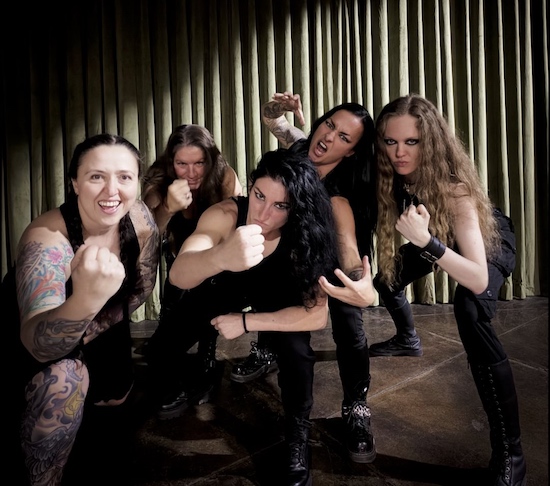
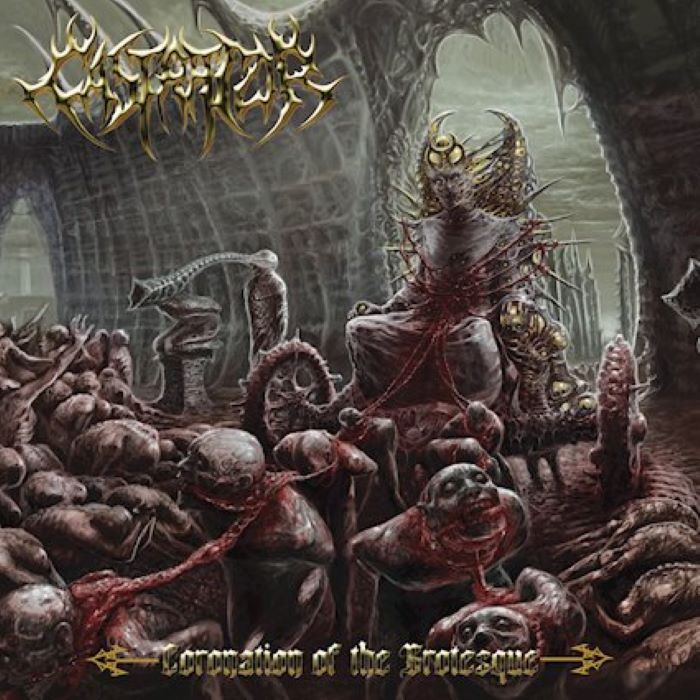
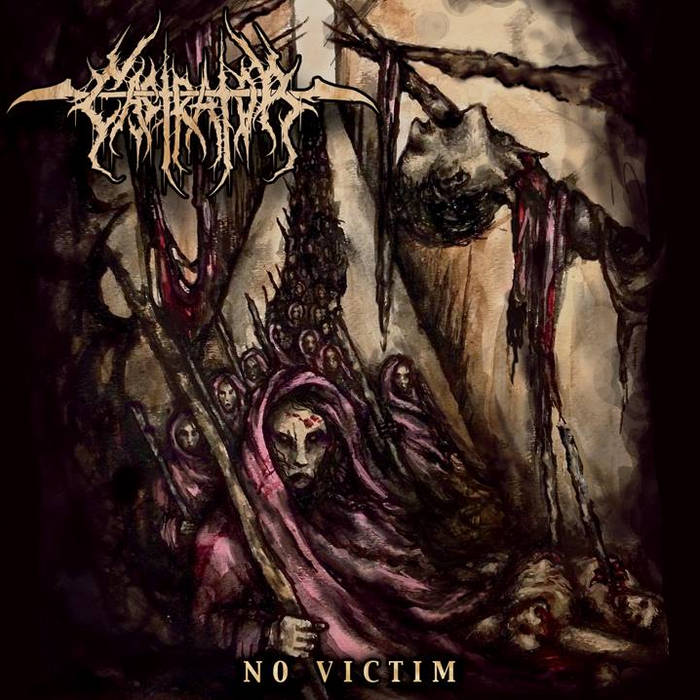
Fresh off a surge of momentum and armed with one of the most uncompromising sounds in modern death metal, Castrator continues to carve out their place in the underground with sheer intensity and conviction. Following the release of their latest album, "Coronation Of The Grotesque", just last year, the band has only sharpened their edge. At the core of that sonic assault is bassist Robin Mazen, whose experience runs deep—spanning not only her work in Castrator but also stints with acts like Derkéta, Gruesome, Demonomacy, Impure, Slag-9, Precipice, Thrash Attack, and Acrimonium. Coupled with years spent on the road working merch, her perspective offers a rare, full-spectrum view of the scene, making this conversation as much about passion and perseverance as it is about brutality and sound.
Tomek

For people just discovering Castrator, how would you sum up the band—preferably without getting us banned anywhere?
I'd describe us as five metalheads who love OSDM and love playing OSDM—coming for your balls… and non-balls.
You and I go back a bit—be honest, did you always see yourself here, or were there some "what am I doing?" moments along the way?
When I think back, I went to college, had a regular job, and played locally. I always wanted to play, but back then, I never saw the big picture. I just thought it was fun to jam and play live. I never really had a "what am I doing?" moment—I just love music, and I love to play.
You've not only been a musician but also worked merch on numerous tours—how has seeing the scene from both sides shaped your perspective?
When I first started touring, there were no other merch girls. It was just my friend and me. There also weren't many women attending shows—maybe a handful, usually with their boyfriends. That's definitely changed. As for playing versus working merch, I just do my job, or I just play. I don't see it as that different. I enjoy both.
What originally pulled you into playing bass—and when did you realize, "yeah, this is it"?
Like most kids, I started with piano. Then I always wanted to play guitar. I played guitar in high school, and I was actually still playing guitar when I first joined Derketa. During that time, I really didn't like using a pick, so someone suggested I try bass. I thought, "Hmm?" and bought a $50 bass at my local music store. That was it. I still have it.
Your bass actually cuts through (which is rare in death metal)—was that always the goal or a happy accident?
A bit of both, but mostly a happy accident. I always say I'm a frequency—no one notices the bass unless it's not there. Live, you need that bottom end, and I try to keep the sound clear and separate from the kick drums.
When writing, are you the glue holding things down or the secret agent sneaking in extra flavor?
With Derketa, Sharon writes most of it. She'll bounce ideas around—she's even called me her muse—but she has a vision. With Gruesome, it's "original covers," and the guys handle the writing. I'm more the business person there. With Castrator, it's Carolina and me. Writing riffs on bass is like building the skeleton of the song, and we just bounce ideas back and forth. We've tried other approaches, but it works best when it's just the two of us.
How does songwriting usually work in Castrator—organized chaos or just pure chaos?
As I said, it's Carolina and me, and I don't think there's much chaos. I'll send tabs and videos, she'll send stuff back. Sometimes we end up with dozens of riffs, though—putting those together is probably the chaotic part.
There's a killer balance between brutality and groove—how do you avoid going full caveman 100% of the time?
I do love some caveman riffs, but we like to keep it old school. We also pull a lot of influence from thrash, which helps keep us from going 100% caveman.
Who are some of your biggest influences—and who would surprise people the most?
When writing, you mostly write what you like, so the influences come through naturally. If I like how a riff feels to play, it's good. The drums can change that for better or worse. As for bands, it's the usual OSDM suspects.
Any non-metal influences that would make diehard fans raise an eyebrow?
I listen to everything. I don't know if it's always an influence, but you might hear some Metallica sneak in, which most people already know. I also love Slayer, Van Halen, The Guess Who, and oldies, but I don't think that really shows up in the music.
Castrator has a very clear identity—did that come naturally, or did it take some trial and error?
When we first started, we didn't use our names or photos. We wanted people to hear the music, not see us. We'd had issues in the past, and people hear the name Castrator and suddenly assume we're a feminist band. Not that there's anything wrong with that—but overall, we're just a death metal band. We play OSDM and write about history, world issues, and religious atrocities. I don't think there were questionable riffs, but the band has definitely matured. I wouldn't mind re-recording some older songs.
The "all-female band" label still pops up—meaningful, annoying, or just background noise?
All of the above. That's why we didn't show our faces or names in the beginning. It's not just men—women do it too. People can't help it. No other genre does this. In country, pop, or rap, you're just an artist. The metal scene is saturated with women in bands—why is it still treated like a separate category? We should all just be musicians.
What's been your experience navigating the death metal scene—welcoming or more "prove yourself first"?
I never felt like I had to prove myself. Maybe you had to prove what vinyl you owned or what shirt you were wearing. But mostly everyone was just enjoying themselves, living in the moment, and finding kindred spirits. It's a lifestyle, not really a hobby. I had a blast—and I still am.
What's your mindset before hitting the stage—locked in, hyped up, or trying not to trip over cables?
I'm usually at the merch booth thinking, "I need to get out of here." Lately I've been more excited, though. Once I'm on stage, it's normal—some jokes with the bandmates, hit the intro, then go time… and try not to fall off the stage.
Any live moment that really sticks out—for the right or wrong reasons?
Most shows have the right reasons, and what fun is talking about that? For the weird ones: in Chicago, I was focused on someone in the front row eating fries. I couldn't tell if she was bored or what. Another show, a girl had maps open on her phone the entire time—like she was planning an escape route. With Gruesome, the first show of a summer tour in Europe, hot as hell, no AC—Matt passed out on stage, still strumming as he went down.
Looking ahead, what can fans expect next—and how hard are you planning to hit them?
With Derketa, hopefully a new record this year or next—I keep pushing for it. Gruesome is touring Europe, heading to South America, and hopefully more shows. Castrator has some fests coming up, plans to tour this year and next, and we've already started working on the next record.
Quick Ones
Favorite bass player of all time?
The usual: Cliff, Steve, Geezer, Geddy.
One album you could survive on forever?
Anything Metallica, Van Halen, Slayer… and Consuming Impulse.
Fingers or a pick?
Fingers.
Pre-show ritual?
I'm usually at the merch table, so it's very PG.
Dream tour?
Metallica and Slayer.
Most underrated death metal band right now?
Castrator, haha.
Go-to non-metal artist?
Van Halen, The Guess Who, oldies radio.
Worst gear fail?
Not too many, knock on wood - In Colorado, my tuning peg broke, and the string just fell off the bass. Luckily, it was the last song. Another time, a transformer died at a fest. Mostly normal stuff.
If you weren't playing music?
My "real" job is in pharmacy, so probably that.
Pineapple on pizza?
No pineapple. I'd have to leave the band—or get rid of them (laughs).
2.35k
Discography
Upcoming Releases
- Blodtår - Monark - Sep 18
- Game Over - When Darkness Falls - Sep 18
- Revel In Flesh - Flesh For The Kult Of Death - Sep 18
- Runemagick - After Chaos: Nocturnal Vigil - Sep 18
- Garota - Strąceni W Ciemność - Sep 18
- Tombstalker - Chaos Monolith - Sep 24
- Massteron - Second In The Spheres - Sep 24
- Draugr - Ahnenfeuer - Ginnungagap Chaos Pt. I - Sep 25
- Wharflurch - Mycodeath And Rebirth In The Outer Clusters - Sep 25
- Noctule - Extinguish Thy Flame - Sep 25
- Stellar Silence - Expeditio - Sep 25
- Critical Defiance - Rivers Of Blood - Sep 25
- Eternal - Conspiracy Of Warheads - Sep 28
- Deconsekrated - The Inexorable Transcendence Of Death - Oct 02
- Amon Amarth - The Allfather Awakens - Oct 02
- Mørkgrim - Sǫgur Frá Norðfirði - Oct 02
- Hell-Born - VII - Oct 09
- Insomnium - Netherworlds - Oct 16
- Night Hag - Great Dismal Darkness - Oct 16
- Master - Among The Seeds Of Death - Oct 16