
Epitome - Interview
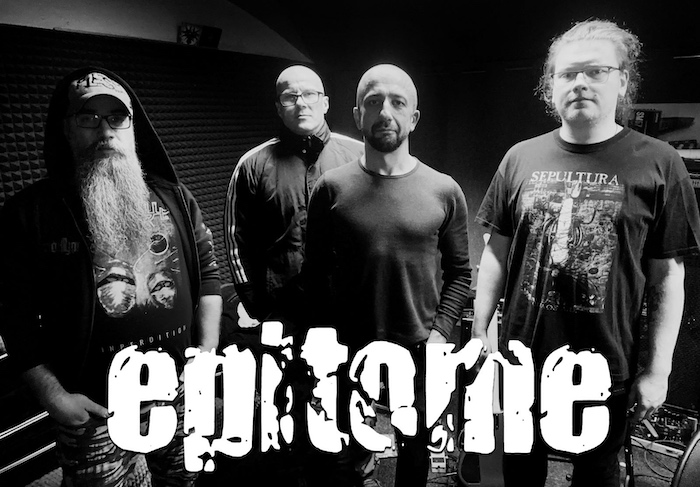
It was supposed to be a farewell, but it became a manifesto. Epitome's new album was conceived as a symbolic finale, yet it ultimately marked the beginning of a new chapter—brutal, unapologetic, and bursting with fresh energy. "Goodbye My ROT" is the sound of a band fully aware of its legacy and strengths, but still hungry to make noise and push boundaries. In this conversation with Kiszka (Bass, Backing Vocals) and Młody (Guitars), we look back to the moment when the end seemed inevitable and go behind the scenes of a lineup that, instead of falling apart, found a new, (un)fresh breath of life. We talk about grindcore's uncompromising spirit, experimentation that still makes sense, and how, after more than three decades, Epitome continues to play as if everything were only just a beginning. Rather than closing a chapter, the band has added the filthiest footnote to its discography.
Levi

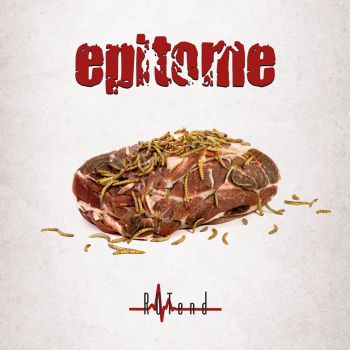
It was supposed to be ROTend, yet here we are with a brand-new album. What emotions accompany the release of "Goodbye My ROT"? Does it feel like you've come back from the grave, or more like a defining turning point for the band?
Młody: We're incredibly excited about the final result, which, to be honest, we weren't completely sure about until the very end. Everything happened very quickly. Besides, not everyone may agree with me, but whenever you're making music, even if you have a clear vision in your head, you never really know how it's going to sound once it's actually pressed onto a record.
I joined the band in the autumn of 2023, and from the very beginning, I was told that the plan was to record Epitome's final album and play a handful of farewell shows. As a guitarist, I had always played completely different styles. Technical thrash and death metal were much closer to me. Grind wasn't really my thing, although I always admired how powerful and effective bands playing that style could be.
And here we are—after twenty years of wandering through different bands, I finally found my home. Once I settled in and found my place within this style—and this may sound a little immodest—I think my enthusiasm rubbed off on the rest of the band. At that point, the idea of ending Epitome's career simply stopped making sense. We want MORE!
Kiszka: (laughs) That's right. ROTend was very close to becoming reality, but we managed to put together a fantastic lineup, and the results speak for themselves. I don't know if I'd call it a breakthrough, though. The atmosphere in the band is just fantastic, and that naturally translates into the music. You can hear it on the album, but even more so at our live shows. Every new member has brought something valuable to the band. There's huge enthusiasm and a ton of new ideas, so we're pushing forward.
The album sounds remarkably confident and cohesive. Is that mainly the result of this lineup having played together for a while, or did you approach the songwriting differently this time around—even though we're talking about such an experienced band and seasoned musicians?
Młody: Every one of us brings a lot of experience to the table, so we simply know what we're doing. We officially started writing the album on January 1, 2025, when Kiszka came to visit me in Przemyśl. In just two days, we came up with and recorded a huge pile of riffs. From that collection, Rafał Chruścicki and I spent the following months—up until around August—turning everything into actual songs. At that stage, everyone contributed something, whether it was complete songs or individual ideas and arrangements. Rafał wrote several tracks himself, including the opening 'Goodbye...' and my personal favorite, 'Crepitating Flesh'.
Kiszka: I also think it comes from the fact that each of us comes from a completely different musical background. That had a huge impact on the writing process. At the same time, there was enough room for everyone's ideas to find their place. Of course, everything had to be put together tastefully and in the right proportions, and that was mainly Młody's and Rafał's job. The final result is something we're all genuinely happy with.
Apart from the greater confidence and tighter chemistry, what has changed the most in the band's internal dynamics since the previous release? Even though the current members of Epitome come from seemingly very different musical backgrounds, it's obvious there's a real spark between you, and you're all operating on the same "Epitome wavelength."
Młody: Definitely the sound, but also a much more thoughtful and meticulous approach to everything. I'm a perfectionist, and even though this album is far from perfect, it simply sounds good. Whether it's better or worse than our previous releases isn't for me to judge, but it's certainly different. Most importantly, our entire approach has changed.
I have a different musical sensitivity and a different skill set, and I tried to fit my own ideas into Epitome's style as naturally as I could. On top of that, the atmosphere within the band is excellent. There aren't two assholes like Kiszka and me anywhere else; you won't find a better drummer than Rafał or a better vocalist than Dyvan. What more could you ask for? It's a dream lineup.
Kiszka: I think Młody summed it up perfectly, so there's really nothing for me to add.
Your music has always balanced between grindcore and death metal, but this album also introduces plenty of experimentation—samples, saxophone, and other unexpected elements. How did you decide what still felt like "Epitome" and what pushed beyond your comfort zone? Was the experimentation spontaneous, or was it part of the band's vision from the very beginning? I know this isn't the first time you've experimented, but sometimes certain ideas work in one context and fall flat in another. In your case, though, it's obvious—or rather, audible—that "the wolf always wants to return to the forest." Looking back on more than thirty years as a band, how do you view your evolution? Early Epitome was raw, wild, and almost recklessly fearless. Today you sound like a perfectly tuned machine.
Kiszka: A lot of the samples were planned from the start, while others came together much more spontaneously. Right from the beginning, we knew we wanted to include additional instruments and samples. I've always been drawn in that direction because I come from that era when we were creating all those twisted, sick sounds. The guys really did an incredible job because we managed to make all those elements work together.
Comparing the early days to where we are now? Back then, it was all about learning and making a lot of mistakes. But it was also a time of unlimited ideas, total freedom, and pure fun. I think we still draw heavily from that spirit today, only now we're much more aware of what we're doing and far more experienced, which is probably something you can hear in the music.
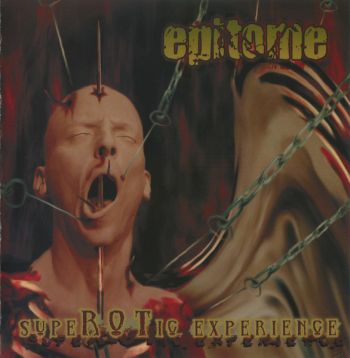
It's impossible not to bring up the classics. How do you look back today on releases like "Auto e'ROT'icism"? Do you feel you've carried some of that fearless attitude into the new album, or is this a completely different story?
Kiszka: If you hear any similarities, that's great, but we all know they'll only be minimal because that record simply can't be recreated. That's just the way it is. Today's Epitome is a completely different band, although it still carries that unmistakable identity—something that immediately tells you it's us. Whether you're listening to our albums or watching us live, you know it's Epitome. I'd describe it as a new, pathological formula for our sound. (laughs)
As I mentioned earlier, "Goodbye My ROT" sounds like a perfectly tuned machine. What was your approach to the production? Were you aiming for rawness, or for carefully controlled chaos?
Młody: Both. We wanted it to sound coarse, dirty, and brown—yes, sounds have colors—but never without control. We divided the work between us. I was responsible for the production and overseeing the rhythm section, while Kiszka and Dyvan handled the vocals. The lyrics and vocal lines were all Dyvan's work. The final stage—mixing and mastering—was Kiszka's responsibility. Everything was constantly discussed with the rest of the band, but in the end, it was Captain Kiszka who squeezed the final result out of the engineer.
Kiszka: Everyone had their own vision, and Haldor—Haldor Grunberg from Satanic Audio, who handled the album's mix and master—had to somehow make it all come together. As Młody mentioned, I stayed in constant phone contact with both him and the rest of the band. Through countless discussions and a few necessary compromises, we eventually achieved the sound you hear today. I wouldn't call it my achievement, as Młody jokingly suggested. It was a team effort from beginning to end. Sure, I oversaw the final result, but there's no way I'd take sole credit for that "success."
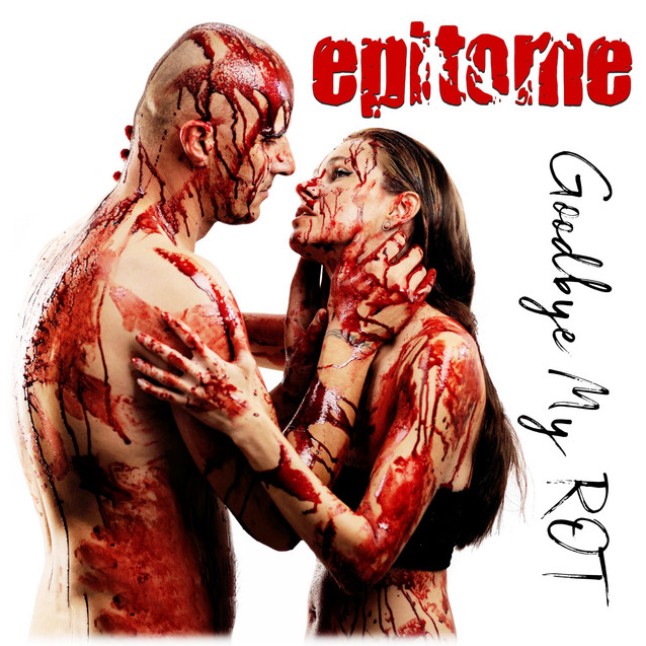
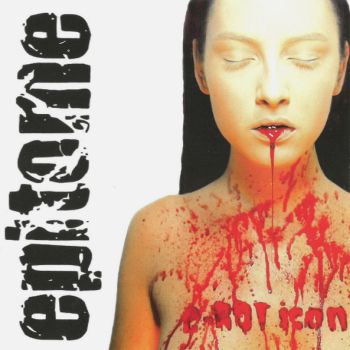
I'd also like to ask about the album cover. It's very personal, yet incredibly stylish and bloody at the same time. Where did the idea come from to use a photograph of you and your wife, and what's the story behind it?
Kiszka: There's no dramatic story behind it, really. I simply had a clear vision for both the album title and the cover, and I wanted to make it happen. At first I considered hiring someone to create my concept, but that proved difficult—and probably way beyond my budget. So I asked my wife if she'd be willing to do it. You can probably guess her answer. In the end, we did everything ourselves and only hired a photographer. The photo session lasted about three hours, and we achieved exactly the effect we were after. After that, I sent several versions to the rest of the band, and together we chose the final one. Nothing particularly extraordinary. (laughs)
Today, you're the longest-running active band on the Polish death/grind scene. What still drives you—ambition, the hunger to play, or perhaps the desire to prove that you still belong in the top league?
Kiszka: Probably a bit of everything, although we don't feel we have to prove anything to anyone anymore. We still enjoy doing this; we're still hungry for it, and hopefully it'll stay that way for a long time.
After delivering such a strong album, what's next? Do you see yourselves pushing the experimentation even further, or refining the style you've already established?
Młody: We're moving forward. New songs are already taking shape, and some of the ideas sound even more extreme than anything we've done so far. We have an enormous hunger to play live, write new music, and explore new sounds. We don't set any limits in advance. Whenever I come up with something new but I'm not entirely sure whether it fits Epitome's style, I send it to the guys and ask what they think. Kiszka's answer is usually: "Everything fits in Epitome." (laughs) As for our release plans, I'll let Kiszka answer that.
Kiszka: We have plenty of ideas, and we're definitely planning to bring them to life. I don't want to reveal too much just yet—we'd rather not jinx anything. We know that not every plan works out, so for now I'd prefer to keep a few things under wraps. We'll keep everyone updated as work progresses.
We already have several split releases planned. The first will be with Neuropatia, followed by another split with Austria's Disharmonic Orchestra. Those are our immediate goals, and that's what we're currently focused on. Looking a little further ahead, we're also planning a brand-new full-length album, although it's still too early to talk about it in detail. I can reveal one thing, though—we already have the title, and the concept for the cover artwork is finished.
 1.48k
1.48k
Discography
Upcoming Releases
- Flotsam And Jetsam - Rats In The Temple - Aug 28
- Exumer - Death Mask Messiah - Aug 28
- Miscreance - Reminiscence - Aug 28
- Witchburner - Black Raging Flames - Sep 04
- Sigh - Goh-Ka - Sep 04
- Behemoth - I, Scvlptor - Sep 04
- Sworn - Null Crowned The Infinite - Sep 04
- Sněť - V Bažinách Vědomí - Sep 10
- Godslave - Godslave - Sep 11
- Terrestrial Hospice - Omnicide - Chapter I - Sep 11
- Epitaphe - III - Sep 11
- Neolith - Inbir - Sep 12
- Blodtår - Monark - Sep 18
- Game Over - When Darkness Falls - Sep 18
- Revel In Flesh - Flesh For The Kult Of Death - Sep 18
- Runemagick - After Chaos: Nocturnal Vigil - Sep 18
- Garota - Strąceni W Ciemność - Sep 18
- Massteron - Second In The Spheres - Sep 24
- Tombstalker - Chaos Monolith - Sep 24
- Wharflurch - Mycodeath And Rebirth In The Outer Clusters - Sep 25