
Dimmu Borgir - Official Website - Interview
Stormblåst |
Norway
 |
|---|
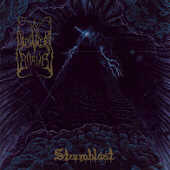

Type: Full-Length
Release Date: January 25th, 1996
Label: Cacophonous Records
Genre: Black, Melodic, Orchestral, Symphonic
1.
Vredesbyrd (Radio Edit)
2.
Progenies Of The Great Apocalypse (Radio Edit)
3.
Progenies Of The Great Apocalypse (Video Track)
1.
Mourning Palace
2.
Spellbound (By The Devil)
3.
In Death's Embrace
4.
Relinquishment Of Spirit And Flesh
5.
The Night Masquerade
6.
Tormentor Of Christian Souls
7.
Entrance
8.
Master Of Disharmony
9.
Prudence's Fall
10.
A Succubus In Rapture
1.
Alt Lys Er Svunnet Hen
2.
Broderskapets Ring
3.
Nar Sjelen Hentes Til Helvete
5.
Da Den Kristne Satte Livet Til
6.
Stormblast
7.
Dodsferd
8.
Antikrist
9.
Vinder Fra En Ensom Grav
10.
Guds Fortapelse - Apenbaring Av Dommedag
Review by Felix on June 3, 2020.
Everybody knows that Enthone Darkness Triumphant marked the breakthrough for Dimmu Borgir. Of course, a financially strong company like Nuclear Blast made it easier to catch the attention of the scene. A clever advertising strategy, a well-developed distribution network and a flawless production were important pillars for the success of the album. Well, honestly speaking, I thought it is a flawless production at the time of the output’s release. Today, the 56 minutes sound pretty polished to me, overloaded by keyboard sounds and without the necessary meanness each and every black metal album, even a symphonic one, should have. This does not mean that I do not like the mix. It scores with its full, warm and profound sound, but I would not call it flawless anymore.
However, a solvent company alone does not guarantee a classic, but Enthrone Darkness Triumphant is definitely an album that deserves this commendation. So, what were the further factors that catapulted Dimmu Borgir at the top of the black metal scene? Well, they came from Norway, the genre’s new epicenter (doubtlessly an advantage back in 1997), they had the finger on the pulse of the times and, last but not least, they had forged impressive songs. Unfortunately, exactly the opener does not belong to my favorites, although it generally enjoys a high reputation. From my point of view, 'Mourning Palace' is pretty lame, consensus black metal that fails to uncover the grim face of the subgenre. The flickering keyboards are slightly annoying, great melodies are missing and only the instrumental part in the second half features more or less vigorous guitars. Yet there are also tracks that still make my blood run faster. The band reaches its absolute climax with 'Tormentor of Christian Souls'. This song combines gloomy keyboards with aggressive, fast and straight rhythms, the guitars do not fall by the wayside and the vocals show the adequate degree of diabolic vibes. Every second of this number fascinates me. The infernal aura is perfectly combined with metallic belligerence and the track shines with pure energy and dynamic. The similarly constructed and equally demonic 'Relinquishment of Spirit and Flesh' also shows the formation in top form, not only in view of its maelstrom-like rapid sections.
Nevertheless, broad parts of the full-length put the emphasis on mid-harsh, melancholic, more or less gloomy parts. I would not call them romantic, even though abrupt, relatively soft breaks like one in 'Prudence’s Fall' faintly point into this direction while revitalizing the aesthetics that gave Stormblåst its face. Dimmu Borgir love to wallow in pain and desperation, but they do not do it in a kitschy way. The (regular) closer 'A Succubus in Rapture' bundles the strengths of the band. It connects attacking mid-tempo parts with softer yet licentious sequences. I would not say that every single note hits the nail on the head, but Dimmu Borgir had style, class and a clear musical vision. It is therefore no surprise that the bonus track on the eleventh position of the here reviewed edition keeps the quality level. Moreover, Raabjørn speller draugheimes skodde” adds a little portion of local color, presented by a band that was definitely in a process of internationalization.
Under the bottom line, there can be no serious doubt that the song material was the main reason for the impact the album made. By the way, did I already mention the grandeur and power of the galloping 'In Death’s Embrace'? Okay, some brilliant moments, for example the spooky beginning of 'Spellbound (By the Devil)' with its overwhelming melody, do not generate equally brilliant but “only” very good songs. Yet there are almost no fillers to find and even the less strong pieces mirror the tremendous potential of Dimmu Borgir in 1997 – the guys just were not always able to transform it into fantastic tracks. However, Enthrone Darkness Triumphant was strong enough to establish the Norwegians on an increasingly controversial yet very prominent position in the black metal universe. Then came Abrahadabra. Is this a synonym for downfall? Either way, that’s another story.
Rating: 8 out of 10
3.15kReview by Felix on June 3, 2020.
Everybody knows that Enthone Darkness Triumphant marked the breakthrough for Dimmu Borgir. Of course, a financially strong company like Nuclear Blast made it easier to catch the attention of the scene. A clever advertising strategy, a well-developed distribution network and a flawless production were important pillars for the success of the album. Well, honestly speaking, I thought it is a flawless production at the time of the output’s release. Today, the 56 minutes sound pretty polished to me, overloaded by keyboard sounds and without the necessary meanness each and every black metal album, even a symphonic one, should have. This does not mean that I do not like the mix. It scores with its full, warm and profound sound, but I would not call it flawless anymore.
However, a solvent company alone does not guarantee a classic, but Enthrone Darkness Triumphant is definitely an album that deserves this commendation. So, what were the further factors that catapulted Dimmu Borgir at the top of the black metal scene? Well, they came from Norway, the genre’s new epicenter (doubtlessly an advantage back in 1997), they had the finger on the pulse of the times and, last but not least, they had forged impressive songs. Unfortunately, exactly the opener does not belong to my favorites, although it generally enjoys a high reputation. From my point of view, 'Mourning Palace' is pretty lame, consensus black metal that fails to uncover the grim face of the subgenre. The flickering keyboards are slightly annoying, great melodies are missing and only the instrumental part in the second half features more or less vigorous guitars. Yet there are also tracks that still make my blood run faster. The band reaches its absolute climax with 'Tormentor of Christian Souls'. This song combines gloomy keyboards with aggressive, fast and straight rhythms, the guitars do not fall by the wayside and the vocals show the adequate degree of diabolic vibes. Every second of this number fascinates me. The infernal aura is perfectly combined with metallic belligerence and the track shines with pure energy and dynamic. The similarly constructed and equally demonic 'Relinquishment of Spirit and Flesh' also shows the formation in top form, not only in view of its maelstrom-like rapid sections.
Nevertheless, broad parts of the full-length put the emphasis on mid-harsh, melancholic, more or less gloomy parts. I would not call them romantic, even though abrupt, relatively soft breaks like one in 'Prudence’s Fall' faintly point into this direction while revitalizing the aesthetics that gave Stormblåst its face. Dimmu Borgir love to wallow in pain and desperation, but they do not do it in a kitschy way. The (regular) closer 'A Succubus in Rapture' bundles the strengths of the band. It connects attacking mid-tempo parts with softer yet licentious sequences. I would not say that every single note hits the nail on the head, but Dimmu Borgir had style, class and a clear musical vision. It is therefore no surprise that the bonus track on the eleventh position of the here reviewed edition keeps the quality level. Moreover, Raabjørn speller draugheimes skodde” adds a little portion of local color, presented by a band that was definitely in a process of internationalization.
Under the bottom line, there can be no serious doubt that the song material was the main reason for the impact the album made. By the way, did I already mention the grandeur and power of the galloping 'In Death’s Embrace'? Okay, some brilliant moments, for example the spooky beginning of 'Spellbound (By the Devil)' with its overwhelming melody, do not generate equally brilliant but “only” very good songs. Yet there are almost no fillers to find and even the less strong pieces mirror the tremendous potential of Dimmu Borgir in 1997 – the guys just were not always able to transform it into fantastic tracks. However, Enthrone Darkness Triumphant was strong enough to establish the Norwegians on an increasingly controversial yet very prominent position in the black metal universe. Then came Abrahadabra. Is this a synonym for downfall? Either way, that’s another story.
Rating: 8 out of 10
3.15kReview by Jack on June 26, 2001.
"Enthrone Darkness Triumphant" was heralded as album that Dimmu Borgir officially became "sell outs". This is a complete and utter load of bollocks. Dimmu Borgir did not sell out, they became popular. This is Dimmu Borgir’s second greatest release in their 7 or so year history (the finest being "Stormblast"). Shagrath, Stian and the rest of the mob acquired Peter Tatgren and the infamous Abyss Studio to the recording for this magnificent symphonic release, obviously the production rate is quality, and this really helps to bring forth every instrument, that you may have not been able to hear on "Stormblast". Stian Aarstad is again responsible for tying this whole production together. When Dimmu Borgir cut Stian loose they unofficially signed their own death warrant.
Aside from that, all elements really come together well to create a masterful epic piece, they really shot Dimmu Borgir into the limelight. Favourite tracks for me include, the opening killer 'Mourning Palace' which for some reason reminds me of Enya-esque melody, regardless it contains great interplay between synthesizer and guitar. 'In Death’s Embrace' is one of the best of examples of symphonic black metal on the entire album. 'A Succubus in Rapture' is the longest track on the album and really has a nice epic feel to it. Also worth noting is that Shagrath’s vocal have improved quite significantly. However, whether Shagrath improved for the better or worse is worth questioning, because as he got better, Dimmu Borgir got worse.
Bottom Line: This was the last album of the good Dimmu Borgir, additionally this was seen as a commercial and "sell out" release. I don’t really care, this is a great symphonic release, from what was once a great symphonic metal band.
Rating: 8.5 out of 10
Review by Jack on June 26, 2001.
"Enthrone Darkness Triumphant" was heralded as album that Dimmu Borgir officially became "sell outs". This is a complete and utter load of bollocks. Dimmu Borgir did not sell out, they became popular. This is Dimmu Borgir’s second greatest release in their 7 or so year history (the finest being "Stormblast"). Shagrath, Stian and the rest of the mob acquired Peter Tatgren and the infamous Abyss Studio to the recording for this magnificent symphonic release, obviously the production rate is quality, and this really helps to bring forth every instrument, that you may have not been able to hear on "Stormblast". Stian Aarstad is again responsible for tying this whole production together. When Dimmu Borgir cut Stian loose they unofficially signed their own death warrant.
Aside from that, all elements really come together well to create a masterful epic piece, they really shot Dimmu Borgir into the limelight. Favourite tracks for me include, the opening killer 'Mourning Palace' which for some reason reminds me of Enya-esque melody, regardless it contains great interplay between synthesizer and guitar. 'In Death’s Embrace' is one of the best of examples of symphonic black metal on the entire album. 'A Succubus in Rapture' is the longest track on the album and really has a nice epic feel to it. Also worth noting is that Shagrath’s vocal have improved quite significantly. However, whether Shagrath improved for the better or worse is worth questioning, because as he got better, Dimmu Borgir got worse.
Bottom Line: This was the last album of the good Dimmu Borgir, additionally this was seen as a commercial and "sell out" release. I don’t really care, this is a great symphonic release, from what was once a great symphonic metal band.
Rating: 8.5 out of 10
Review by Felix on January 13, 2020.
Dimmu Borgir's second full-length was their last album before the hype set in. Well, however you look at it, Stormblåst does not shine with compositions that can cause (justified) enthusiasm. It boasts with a truly impressive artwork, but the musical content fails to impress as well. The album shows a band that has taken the first steps without being already able to make the best out of its potential. Tracks such as "Broderskapets ring" uncover the talent of the guys to combine heaviness with melancholy in a pretty strong manner. The dragging guitars guarantee a heavy fundament and the hoarse, slightly overproduced lead vocals - not the spoken vocals - contribute the black metal element. But the most exciting thing is the short piano line with nine tones that appears from time to time. The track scores with a very natural flow and loneliness and yearning shimmer through every tone of the keyboards (guess my description is slightly kitschy, isn't it? I apologize). Anyway, "Broderskapets ring" (and further songs) made clear that black metal is more than malignant fury and "Christ-raping" aggression. The album has more songs with more or less meditative parts and this facet gives Stormblåst a pretty unique appearance.
In view of its representative duties, it seems only logical that the title track holds some slow-moving sections as well. It starts with a short outburst of violence, but relatively mild harmonies with almost feeble background vocals gain the upper hand quickly. The keyboards have a comparatively big part on Stormblåst with the effect that the album is not too far away from Gehenna's "First Spell". This is meant as a compliment, because Dimmu Borgir are able to elicit the keyboards some fantastic lines. The title track's break after three and a half minutes gives way to an instrumental section that offers fascinating, almost dreamful yet appropriate melodies. Dimmu Borgir offered their first creative highlights after the lukewarm debut - but this is not to say that everything worked in a flawless manner. Sometimes the keyboards ruin a song, just listen to its feeble chirping in the seventh track. Even worse, the band is on the wrong track from time to time. The flabby instrumental "Sorgens kammer" is free from any form of metal but equipped with a playtime of seven minutes - don't ask me why. (And the miserable story behind the song completes the picture, just read the "additional notes" on this website.) Finally, it becomes obvious that the material at the end of the running order does not reach the level of the highlights which mainly shape the album's first half. Great dramatic moments and tasteful melodies are mostly missing.
The production lacks penetrating power, but it generates an eerie atmosphere that fits the artwork very well. Some sound effects go wrong due to too much reverb, but I don't want to be too picky. I like the sound of the album and that's why I was not interested in listening to the second version of the album which was released some years ago. The here reviewed original edition was the final work of Dimmu Borgir that "came out of the woods", if you know what I mean. Regardless of the quality of the single songs, it spreads a somehow credible emanation. A little bit more poison, a little bit more velocity and a little bit more coldness would have been fine, but it remains a fact that Stormblåst has a great atmosphere, at least in its best moments. It is not bombastic, not pompous or flamboyant - it has a natural charm. With better songs, especially at the end of the album, it would be a real classic. Nevertheless, I recommend giving it a try during a long winter night.
Rating: 6.8 out of 10
3.15kReview by Jack on June 15, 2001.
Stian Aarstad is one of the best synthesizer and pianists there was working in symphonic black metal (don’t quite know what he’s doing now, last I heard he was doing keyboards for Enthral). If you ask me (which you are, reading this review and all) Dimmu Borgir really shot themselves in the foot, when they let this man go. Yes, they have sold countless records since, but they just do not have the cool atmosphere than Stian provided with his key skills. And he has a cool look too, I mean who can go past a cane and a swanky top-hat! Aside from those factors, he provided awesome background music for guitarists Shagrath and Silenoz to base their riffs upon.
Shagrath’s voice back in 1996 was not quite developed as it is today ("Puritanical Euphoric Misanthropia"), vocals are actually the only thing that really let this album down. Cool rifts, consistent drumming and bass work, provide a very commendable easel for Stian to paint his harmonic keyboard work upon. Spoken words on this album are honorable and provide more atmosphere for the album. All in all, this is a fine symphonic release in the black sector. Favourite songs are "Broderskapets Ring" which is essentially a spoken song with cool keyboards dominating. There is a lovely instrumental track "Sorgens Kammer" which showcases a bit more of Stian’s piano ability. "Antikrist" is a pretty stock-standard black tune, but about the halfway mark it contains the most exhilarating interplay between guitars, bass, keyboards and drums that I’ve ever had the pleasure of hearing. That alone is worth purchasing this album, that is if you can find it stocked still, I know of a fair few people that have had difficulty in locating "Stormblast".
Bottom Line: If I’ve heard "Stormblast" when it first came out, I would be sure to give a ten, as its innovation was absolutely fantastic... but I didn’t so I can’t. Regardless it’s still awesome symphonic black magic. Pity Dimmu Borgir didn’t stay on this path.
Rating: 8.5 out of 10