
Within Temptation - Interview
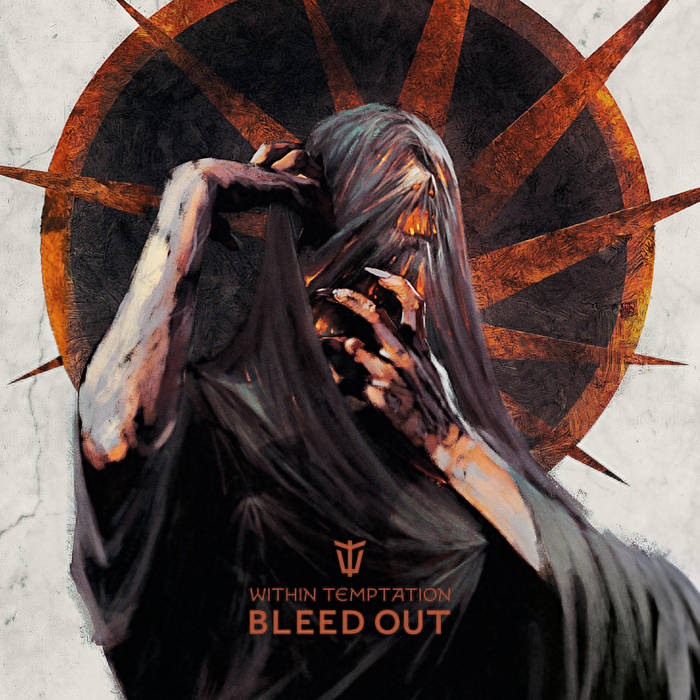
In October 2023, Within Temptation returned in full force to the music scene with "Bleed Out," which explores global injustices and the tumultuous state of the world. In this exclusive interview, vocalist Sharon den Adel shares insights into the creative process behind this intense and politically engaged album. With a more aggressive and dark musical approach, the new work marks an innovative phase in the Dutch band's trajectory. During the conversation, Sharon reflects on the unexpected ease in writing "Bleed Out" due to the proximity of the themes to her own emotions and experiences. The band addressed issues such as the war in Ukraine and the fight for women's rights in Iran, transforming their concerns into powerful and impactful songs. The interview also details the band's involvement with Music Saves UA, an organization that supports Ukrainian musicians and offers humanitarian aid to refugees in the country.
Marcelo Vieira

"Bleed Out" explores global injustices and the tumultuous state of the world. How did this approach impact the band's songwriting process and musical choices?
I think the sound is more aggressive, and the emotions are a bit more intense. I believe this is the most intense album we've ever made. We'll never be as heavy as Sepultura, but in our own way, it's the heaviest album we've produced.
What were the main challenges in creating an album with such intense and politically engaged themes?
Surprisingly, this album was remarkably easy for us to write because it was very close to our emotions. We just let our frustration and emotions flow. The album was written in a very short period, about two and a half months, although it was spread over an entire year since we were touring and doing other things alongside. But every time we got together, new songs always came out, and there was a lot to write about, of course. So, there weren't many challenges, to be honest. Of course, we wanted a specific sound and had to experiment a lot in the studio with drums and guitars, making them more interesting, heavier this time. That was a musical challenge for us, as there are more [sonic] possibilities nowadays.
How did you balance the need to talk about these topics with producing music that is also accessible and catchy?
Well, I think that in terms of sound, combined with my type of voice, there's always a certain softness. But the music, of course, was louder and more aggressive. And this combination of softness and aggressiveness has always been present in our type of music, more or less. So, the pieces always fit together, in my opinion.
Among the complex themes addressed in the lyrics are the war in Ukraine and the fight for women's rights in Iran. How is it for you and the band to take a stand on these issues through music?
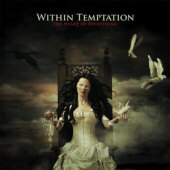
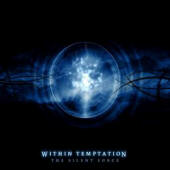
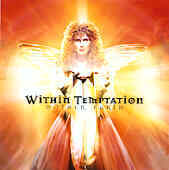
We've always been politically involved, but we used to use metaphors, like in "The Heart Of Everything," which talks about William Wallace; some historical events that can also be seen happening in everyday life. The song 'The Howling' was written when far-right groups were gaining strength in our country in 2004, just as [the album] "The Silent Force" was also inspired by it. However, the influence of the far-right was already present before that, with [the album] "Mother Earth," with some turbulence in that area. So, many songs have been politically motivated and engaged over time, but we never talked about it so clearly unless someone asked us, which rarely happened. So, people always thought our songs were about fantasy stories, which, of course, was the image we conveyed visually on stage. But in reality, we often had a political engagement [behind the scenes].
Now, we feel we are older, and the threat of Russia is approaching Europe. It's only a two-hour flight from where I live to Kyiv and realizing that this war is happening in our backyard makes us feel that we need to be clearer about our position. I applaud anyone who does that because it's necessary for us, as Europe, to unite and confront Russia's aggression and help Ukraine because, at the moment, the situation is not favorable for Ukraine.
With "Bleed Out" being so diverse in terms of musical styles and themes, is there any aspect related to the album or the creative process that you would like to highlight?
Well, as I said, the way we wrote this album was a bit different from usual, with different types of guitars, which gave me the possibility to do more vocally and resulted in a song like the title track, which is more experimental than we've done before. That was something I really wanted to have, more experiences, a more experimental approach. For us, it's already something experimental to try to take a new step forward.
In the past, I was very limited with my vocals because I have a range, but I will never sound like a man, of course, and with the same aggressiveness. However, with the guitars now having more strings, we can go lower than before, and that allows me to sing in different registers. It's a challenge for me and also for the guitarists, who had to play guitar lines on the keyboards and then transfer them to the string instruments.
We would tell the band's musicians: 'Okay, now you play this on the guitars.' And they would ask: 'How? That's not possible.' But we can do it, even if we can't do that, you know? Sometimes it's easy for us because some of us don't write so well on the guitars, and it's easier on the keyboard [emulated] with guitar sounds. But then it's impossible to play because you need to stretch your fingers to a certain point, and there's a limit to that. So, we had to work together with the guitarists to find a middle ground in the guitar sound, and it worked perfectly for me.
You mentioned living in Yemen when you were a child. How have your personal experiences in the Middle East influenced the lyrics of "Bleed Out" and the way you approach social and political issues in your life as a whole?
Although I enjoyed my time in Yemen, even being so young, only six years old, I studied at an Arab school for a while. The people were super friendly to me, but I always noticed, you know, the things people don't say, the way they looked at me as a girl in general, not just at me, but at girls in general. It was a world very different from where I came from, the West. And at six years old, I already felt that difference. The way people dressed was different, and you can also feel something even without people saying it.
I always felt that women were oppressed because it's a different culture, a very male culture, where men can hold hands, but women can't do anything. It's so strange. For me, it was like seeing the women in Iran, but also an entire generation, especially the younger ones, trying to break the regime. They want more freedom, while the older generation and the regime, especially those in power, want to keep everything the same, even though the people's voice is saying something else.
If you want to continue with your way of life and are happy with it, that's fine with me. But if many people want a different way of life, more democracy, or more freedom to perceive religion, I support the voice of those people. I think everyone should have their own voice and be able to choose what they want to wear or how they want to present themselves, but that comes from the West, of course, and I acknowledge that. However, when I lived there, I really felt that there is a big difference between men and women.
It is necessary to recognize the power of women in taking a stand, knowing that they could be imprisoned or even die for it. Many men also composed songs in honor of their sisters, mothers, and ended up being hanged just for making music, for talking about what is not acceptable there. When I saw the news about Mahsa Amini's death, it touched me deeply; I was very sad. It immediately inspired me to compose 'Bleed Out,' which talks about this girl knowing she is doing something good for the last time, conscious that she won't survive but doing it because she knows it's for a good cause and for other girls after her. That is very inspiring.
How has the response from fans been to this new album?
Most people really liked it. And, of course, it's a slightly different sound again, so sometimes people need to adjust and really get familiar with it. But, for the most part, it's been very positive. In my opinion, people also know that we change a bit with each album, and it becomes a little different. Sometimes it's difficult for people because often, of course, also for me, when I hear an album that I really love, I identify with the music I listen to. And if the next album is very different, I also need to get used to the new sound of the band I like so much. So, sometimes it works, sometimes it doesn't work as much.
What do you hope they take away from "Bleed Out" in terms of message and musical experience?
What I hope is that what I wanted, what we wanted to do with this album. We are storytellers and bring news, inspired by things happening around us, inspired by our own lives. Many things. But especially when we talk about Iran or Ukraine, it's important for us that people realize that a news story is forgotten the next day and life goes on, which is natural. I do the same thing.
But if we really want to change things and support certain people in certain countries, we need to keep talking about it and bringing these issues to light. By writing songs about it, I hope that people start to think a little more about these issues and maybe do something, like donating or even talking with friends about the same topics, to keep these themes alive, because people in those countries won't feel so alone. We need to support each other in that direction, I believe. And not just a little. We need to really support each other, and together, we can make that change. Sometimes, they also need external help.
The music video for 'A Fool's Parade' was shot on the streets of Kyiv. How was the experience of filming in important landmarks of the city during such a delicate moment for Ukraine?
I couldn't fly in because there were no commercial flights. So, we flew to Poland and then took an overnight train to Kyiv. It was a long journey to get there. And when we arrived, they immediately gave us guidance to download the air raid alert app on our phones and set it up for the region we were in. So, every time there was an alert, we could get to a shelter safely.
These things are a bit strange when you come from the West, where you live a normal life. You immediately realize you're in a different country, which is at war. We had to seek shelter a few times while we were there.
I felt many emotions being there: sadness, but also admiration for the people who are so resilient and united in fighting against the Russians. Every person I spoke to had lost someone in the war, but also everyone had their own story about something that happened to them. Additionally, everyone is doing their part, volunteering, and donating money to the army. They are very united and understand the need to donate money because they know it's the only way to win the war.
In many moments in Ukraine, they lack ammunition to fight back because there isn't enough ammunition. These situations make us realize that they are on the verge of losing the war if they don't receive support, not just from me, but from everyone. They need support, they need money, they need more advanced air defense systems than they already have to stay safe. They also need ammunition.
It's simple things like that. They can't defend themselves on certain days and just let it happen because they know they can only use it once and only when it's really dangerous, and not when it's far away. That brings the war closer to us, affects us deeply. Although I stayed there for only a few days, it changed something in me and made the experience more intense, in my opinion.
The band announced that all royalties from 'A Fool's Parade' will be donated to Music Saves UA. How and when was this decision made?
We have made donations in other ways to Ukraine, but since we were going to make a song about this war along with a Ukrainian singer [Alex Yarmak], we got in touch with the organization. We felt it's a good organization because they try to help musicians in Ukraine, but also because music is very important in these difficult times for them. And sometimes, music is all you have when you feel sad.
What they do is use the money to help refugees in their own country, providing clothes, food, and other special needs they have. The money is also used to build shelters for the refugees. They also try to help musicians continue playing, holding shows in underground venues for people in need. Moreover, they organize classes for children with PTSD [post-traumatic stress disorder]. They do many good things with this money. So, we think it's a good organization to donate our money to.
To wrap up, the previous single from 'Bleed Out,' 'Ritual,' is described as inspired by the movie "From Dusk Till Dawn." Is it your favorite Tarantino movie?
It was the first film I saw of his. And it was the biggest shock I had. Like, "Oh my God, what's happening?" At first, it seems to be an adventure movie, and suddenly, everything turns into chaos, and everyone turns into vampires, which I didn't expect because I didn't read about it before watching. I loved it. It made me fall in love with his films, and I watched all of them. And yes, I'm looking forward to the next one.
Which one is your favorite, then?
Oh, God! It's "Django." But I must say, they are all cool. And "Kill Bill" was, of course, amazing. But honestly, which one isn't good? That's a better question. "Which of his movies don't you like?" [Laughs.]
 4.37k
4.37k
Discography

Upcoming Releases
- Blodtår - Monark - Sep 18
- Game Over - When Darkness Falls - Sep 18
- Revel In Flesh - Flesh For The Kult Of Death - Sep 18
- Runemagick - After Chaos: Nocturnal Vigil - Sep 18
- Garota - Strąceni W Ciemność - Sep 18
- Tombstalker - Chaos Monolith - Sep 24
- Massteron - Second In The Spheres - Sep 24
- Draugr - Ahnenfeuer - Ginnungagap Chaos Pt. I - Sep 25
- Wharflurch - Mycodeath And Rebirth In The Outer Clusters - Sep 25
- Noctule - Extinguish Thy Flame - Sep 25
- Stellar Silence - Expeditio - Sep 25
- Critical Defiance - Rivers Of Blood - Sep 25
- Eternal - Conspiracy Of Warheads - Sep 28
- Deconsekrated - The Inexorable Transcendence Of Death - Oct 02
- Amon Amarth - The Allfather Awakens - Oct 02
- Mørkgrim - Sǫgur Frá Norðfirði - Oct 02
- Hell-Born - VII - Oct 09
- Insomnium - Netherworlds - Oct 16
- Night Hag - Great Dismal Darkness - Oct 16
- Master - Among The Seeds Of Death - Oct 16