Necromancia - Interview
Germany’s pure metal powerhouse Primal Fear were forged by four well-known individuals in the scene including Mat Sinner, founder and songwriter of popular 80’s band Sinner, and Ralf Scheepers, the robust singer for Gamma Ray. Their unrelenting metal attitude and oldschool approach has made them the kings of metal in their own country and if they keep it up the world will follow. Their latest album “Black Sun” has been compared to Judas Priest classics like “Painkiller” and I’ll be the first to admit this band is the true successor to the Metal Gods! This is modern Priest mixed with classic Iron Maiden! Excited? Let’s hear from Mr. Sinner himself.
Luka ‘Wrath’
A congratulations, first of all, on the brilliant album "Black Sun"! Tell me, what has the reaction been like so far around the world?
It’s been really good all over the world so far, it came out just Monday in Europe, last Wednesday in Japan and Korea and the response from fans and magazines has been great! It’s on Germany’s Top 40 charts... so it looks good for us!
Can we expect a tour anytime soon?
We will start with Russia in June and we’ll be all around Europe in September and October. After that we’re heading to South America and perhaps the U.S and Canada... and Japan is calling too, so... we’ve got a lot to do!
The whole world, essentially! Now how did the plan to go to Russia come about? Not a lot of bands tour the country, what is the scene like in eastern Europe?
Well Nuclear Blast has a good distribution deal there and so they invited us. Russia was mainly a land of bootlegging so far, but now they [NB] have an official distribution plan there and they’re doing a lot for us. We have a lot of fans out in Moscow, so that will definitely be a big show for us!
The closest bands Primal Fear can be compared to are modern Judas Priest, and Halford. How much of an influence are these bands?
None.
For me, at least (laughs). I mean, everybody else in the band is into them and we are seen as a band that is very influenced by Judas Priest, because I think the guitar riffs are similar, and Ralf [Scheeper]’s vocals are very similar to Rob [Halford]’s, but if we do have a strong Priest influence it would be from albums like “Screaming for Vengeance”, or “Defenders of the Faith”, and of course “Painkiller”, but not the new material.
What do you think about bands like that, Priest and Maiden, still cranking out pure metal after so many years!? Do you think the energy and power is still there, or are they getting old?
Yes it’s good, why not? There’s a lot of new bands arriving on the scene so the music is still very alive, and the old, quality bands can still survive and they’re doing a great job.
Do you think all the energy and power is still there?
Yeah, of course! They can still put on a great show, I saw them [Iron Maiden] about a year ago and it was great.
Do you think you could do it for another, say ten, fifteen years with Primal Fear?
Wow! We’ll see! I mean, it depends on whether it’s still fun for us or not, that’s all.
OK, let’s talk about Sinner, after almost 20 years of running that band, you‘ve built up quite a reputation and fan base in Europe. With Primal Fear, does it feel like you’re starting all over again, from the bottom?
No, that’s the great thing! With Primal Fear it was a lot easier: it was well accepted and well reviewed from the first day and we started on a very big label right from the start. There was no playing small clubs or anything like that, the reaction in Europe was very good from the first day, so we were never really newcomers like Sinner. When Primal Fear came out on stage it was, like, everybody wants to see it, you know?
Are you still gonna keep going with Sinner, or have you made a complete switch?
We’ve had a lot of talk about that. For the last few months I’ve had to focus totally on the new Primal Fear album but I think there is some songwriting coming up in the summertime for Sinner. I’ve been getting calls from the old line-up and they’re definitely interested. So we’ll see, perhaps we’ll have a new album out by next summer!
Sounds good. Do you keep in touch with today’s huge underground metal scene? What are you favorite bands as of today?
Yeah of course, we listen to a lot of bands, I mean we have a lot of support bands from Europe for our shows and we’re really into the kind of stuff they’re doing. It is just impossible to pick out any in particular ones though, there is just so much going on. The scene is very big.
I agree, it just keeps growing; 2000 and 2001 have been very groundbreaking and productive years for underground metal, the strongest in a long time. Do you think real metal is slowly returning into the mainstream world once again?
It depends on a lot of things and not only on the number of fans. There is a lot of them, certainly, we saw the turnout last year in the U.S. was great and the people, they knew our songs and all that. But it also depends on the media. A lot of them want to ignore traditional heavy metal, or other types of really heavy metal and give it very little exposure, so that is what makes it difficult for us.
How do you like playing in the U.S., as opposed to Europe?
Well Europe is home for us and we can basically play our whole show with the pyrotechnics and everything there. Now flying over to North America all we’ve got is our guitars and that’s it, you know? So the show is kind of stripped-down, but in the end if the band is in a good mood and the audience is enjoying the show then it can be something really special.
We did a festival last year there and all the fans that were used to their American bands saw us as some kind of strange and “exotic” band from Europe or something (laughs), the crowd was really loud, I mean, they gave us a great time and we enjoyed playing there.
Now how do you feel about Napster and all the internet pirating going on? Is it a positive thing, or negative?
It’s negative, of course. I mean, people will download a whole album for nothing so how can a musician even exist? For us it’s all work, songwriting, lyrics, producing, it goes on for months and months and then two weeks before the album even comes out you can download it on like Audio Galaxy or something. And I think this will eventually destroy the music. The people who always use this should think about what they’re doing to the musicians they like. If we were selling millions of albums and were rich I wouldn’t give a shit, you know? But a lot of people and musicians in Europe really believe in what they’re doing and they’re not rich off their music. So they’re working really, really hard and if their music is downloaded for free it will destroy their career.
Tell me, what was it like working in the little-known Sonic Ranch studio in Texas? Why did you choose to do the mixing there, it is basically in the middle of the desert!
Yeah it was kinda weird but very nice, we decided to go there for complete peace of mind and total focus on the album without any outside distractions. No cars breaking down, no lawyers, tax people, girlfriends or any of that (laughs), so we got to really focus on the album and it was a great time for us.
I understand you contributed vocals on a few songs like 'Mind Machine'. Is this something we can expect to hear more of later on?
We’ll see. I do a lot of backing vocals anyway so it was not new to me or Ralf either. We share vocals all the time on stage and it was his idea to put it on the album. Normally I’m coming more from a rock side, I’m more of a rock singer than metal singer so I don’t contribute as much.
My favorite song from Black Sun is definitely 'Mind Machine', do you have a favorite?
Lots! (laughs) Well, working on the album for such a long time and working on every single detail it becomes very hard to choose. 'Armaggedon', 'Lightyears From Home', 'Mind Machine', 'Fear', 'Controlled'... they’re all like babies to me.
How does the songwriting process happen? Do you write all the music or does everyone contribute?
Well the good thing with Primal Fear that helps us keep the pace with album releases is that every guy in the band has a small recording studio at home where we record all our ideas and bring it all together in the practice room where we work together on the material. We’re a very creative team and we generally have a lot of fun in the creating process!
Can we expect the sound and musical direction of Primal Fear to change over the next few albums?
I don’t think so, no, it’s just that we know the basic idea already for the next album and we will prepare it well because it’s a long way down the road, and we just released this one! It will definitely be a variation of the sound but it will still be very much Primal Fear.
It’s certainly good to hear bands that still have so much commitment.
Yeah, our slogan is that “if Primal Fear is on the outside, Primal Fear is on the inside” so anyone buying our CD knows exactly what they get, and it’s top quality.
The good thing about European fans is that they’re very committed, and we have a very strong fan base here, and I think that maybe it’s easier for us than some of the American bands who are trying to change their sound to always be modern. So there is no real need for Primal Fear to go on the modern side, a lot of new bands that are popular now like, say, Puddle of Mud, are nothing new for me because I’ve heard their sound before and they are just following trends. With traditional metal, it never changes, so I could be doing this five years earlier or five years down the road and still be successful.
That’s right. Well some things never change, and this style of metal certainly wouldn’t be called traditional if it did.
That’s right (laughs).
Well, thank you for your time Mat, any closing remarks?
Thank you very much for the interview, and I hope to see you sometime when we tour!
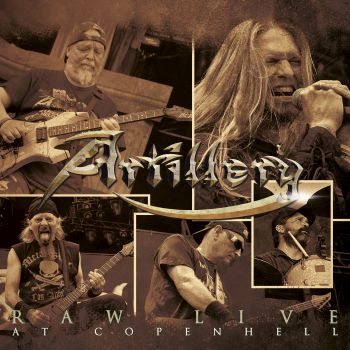
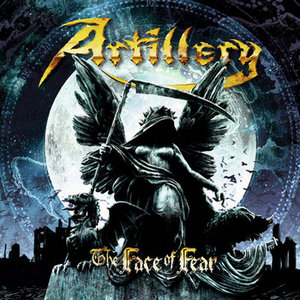
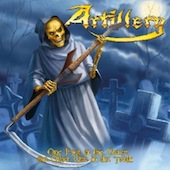
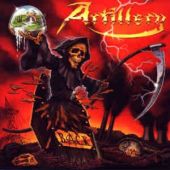
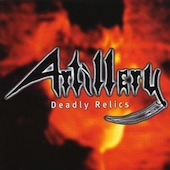
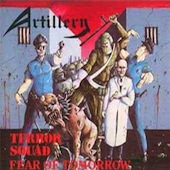
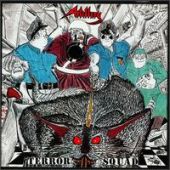
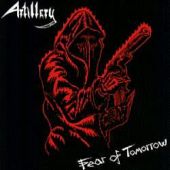
Guitarist and founder of the legendary thrash metal band Artillery, Michael Stützer offers a fascinating behind-the-scenes look at music and the band's evolution over a 41-year career. He shares insights into recent lineup changes, highlighting the departure of members and the arrival of new talent, while emphasizing the importance of maintaining the group's signature musical identity. He also discusses the long-awaited release of the live album "Raw Live" (Mighty Music), a posthumous tribute to the late drummer Josua Madsen, capturing the unique energy of a concert at Copenhell, a festival held in the band's home territory. band in Denmark. Furthermore, the interview highlights the re-release of the iconic albums "Fear Of Tomorrow" (1985) and "Terror Squad" (1987) in Brazil through the Voice Music/Rock Brigade Records partnership, providing a unique insight into Artillery's contribution to the Danish music scene and the development of thrash metal.
Marcelo Vieira

To start with, I'd like you to talk a bit about the recent lineup changes in Artillery and what caused them.
Michael [Bastholm Dahl], our former vocalist, had some family issues he needed to address. He couldn't travel and tour due to a recent divorce and issues related to his son. Also, maybe he was a bit tired of the routine. It was his decision, and we remain friends. Kræn [Meier, guitarist] wanted to pursue his own projects, play something heavier, and we couldn't agree on the musical direction. So, he left the band, but on good terms. Now, we have two new members, guitarist René Loua and vocalist Martin Steene, who bring new elements to the band.
Lineup changes are common in bands. Do you believe that, as long as you're in the band, Artillery will sound like Artillery?
I hope so because I've been in the band since the beginning. I believe my presence is crucial to maintain Artillery's characteristic sound. However, the other members, especially Peter [Thorslund, bassist], who has been in the band since 1988, are amazing musicians. Currently, we're in great harmony and excited to play live.
Being the one responsible for maintaining the band's characteristic sound is a big responsibility?
Yes, it's always challenging, but the new members also contribute a lot. We want to stay true to Artillery's sound, although sometimes we incorporate different elements. The responsibility is big, but I do my best, hoping people recognize it.
Do you consider fans' expectations when composing or recording an album?
It's a balance. We start with a riff and build from there. Sometimes we think about the fans, other times we experiment with new things. I'm impressed when Artillery fans praise songs that deviate from the standard. I think it's cool because it shows that, no matter how different they are, they still carry the essence of Artillery.
Over the years, Artillery has gone through various musical phases. How would you describe the band's evolution from its founding until today?
In 41 years, it's natural to have some changes, but we keep the roots. When we started, we wanted to be faster and rougher. Bands like Black Sabbath and later Metallica had a big impact. We try to maintain that essence, introducing subtle changes to avoid monotony.
And how would you label Artillery's music today?
I've always called it melodic thrash metal with elements from the 1970s and 1980s. This identity runs through our albums, from "Fear Of Tomorrow" to the most recent ones. We want to preserve that sound.
Artillery just released the live album "Raw Live". How was the experience of recording this?
It was amazing. Playing at home, at a big festival in Denmark, in the presence of friends and fans, created a unique atmosphere. People were excited, and the sound quality is incredible.
How did you choose the setlist for this show, and how did the atmosphere of the event influence the performance and the final result?
We tried to include main songs that we always play, like 'Khomaniac' and 'Terror Squad'. We wanted to represent each album, but we couldn't due to time. Unfortunately, the song 'The Almighty' ended up being left out.
Recording a live album presents unique challenges and rewards. What were some of those?
Certain songs, like 'Khomaniac' itself, come to life on stage with the interaction of the audience. Festivals are a great place to gain new fans. As for challenges, maintaining authenticity, without studio alterations, is essential. Furthermore, this album is a tribute to our late drummer, Josua [Madsen, who died in 2023].
Recently, the albums "Fear Of Tomorrow" and "Terror Squad" were reissued in Brazil. What was it like to create "Fear Of Tomorrow"? Did you feel like you were doing something completely different at the time?
Yes, in the beginning, people didn't understand our sound, but we wanted to be faster and heavier. Inspired by bands like Accept, we sought something distinct. The changes were well received, and today I'm proud to be considered one of the pioneers.
What was the contribution of "Fear Of Tomorrow" to the Danish music scene at the time and to the development of thrash metal globally?
We were one of the first Danish bands with such a heavy and dark sound. Before us, there was only Mercyful Fate. We were fortunate to have dedicated fans, despite the initial resistance from venues to give us space. This early contribution was crucial for us.
There was a significant progression in Artillery's sound from "Fear Of Tomorrow" to "Terror Squad." In what ways did the band evolve?
We became better musicians and explored different styles while maintaining an original approach. We wanted to challenge ourselves, like in 'The Challenge,' which was like a much heavier thrash metal. Compared to "Fear Of Tomorrow," we had become much better musicians by that time.
The lyrics of 'Terror Squad' draw a lot of attention, with criticism and revolt. Can you share something about that and if there was any specific source or inspiration at the time?
Some lyrics were written by Morten [Stützer, bassist, who died in 2019]. 'Terror Squad' was inspired by personal experiences, like clashes with the police. 'The Challenge' addresses global challenges. The lyrics reflect lived situations and relevant issues of the time.
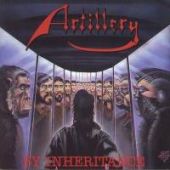
Artillery was inactive for five years between 1993 and 1998. Looking back, was that break really necessary after what is considered the classic album, "By Inheritance" (1990)?
Yes, at the time of "By Inheritance," there were internal disagreements about playing live. Some members weren't as interested in hitting the road, which caused problems. Today, we play a lot and have a very good relationship, but at that time, priorities were different.
What did you learn during that time and were able to put into practice when reuniting the band for the album "B.A.C.K."(1999)?
We learned a lot about what not to do. Consistency is crucial, with many interviews, public relations, and tours. If you release an album and don't do many shows, you can lose relevance. Playing live is essential, especially today, when it's hard to sell CDs and vinyl.
Thinking about the band's discography, which do you consider your best or most important work and why?
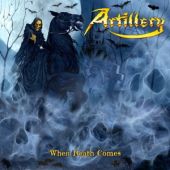
It's always hard to say. Many consider "By Inheritance" the best. Albums like "When Death Comes" (2009) were important, rebooting everything. The next album we make will also be crucial. Personally, I change my mind, considering one album the best one day and another the next.
What legacy do you hope to leave when Artillery retires from stages and recordings?
I hope people remember us for our dedication to playing live and for seeking originality in our music. I want to be remembered as a good person, someone truly dedicated to the metal we play.

Discography
Upcoming Releases
- Loneshore - Nothing Left To Deconstruct - Jun 19
- Inscribed - In Silent Oblivion - Jun 19
- Zørza - Twilight Of The Golden Star - Jun 26
- Forsmán - Brenndar Rústir & Fuðrandi Fjörur - Jun 26
- Dead Kosmonaut - Retrospectre - Jun 26
- Feralia - Ultima Requies - Jun 26
- Entropist - The Vision - Jun 26
- Coprolith - Putrescence - Jul 03
- Soothsayer - The Unbinding - Jul 03
- Moonspell - Far From God - Jul 03
- Haserot - Advent Of Suffering - Jul 10
- Mangled Carpenter - Between Blood And Silence - Jul 17
- Sallow Moth - Hydrophilous Brood - Jul 24
- Litosth - Dreaming - Jul 24
- Horrifier - Revelations Of Gore - Aug 07
- Neolith - Inbir - Sep 12
- Blodtår - Monark - Sep 18
- Enterchrist - We Are Just Getting Started - Mar 19