
News
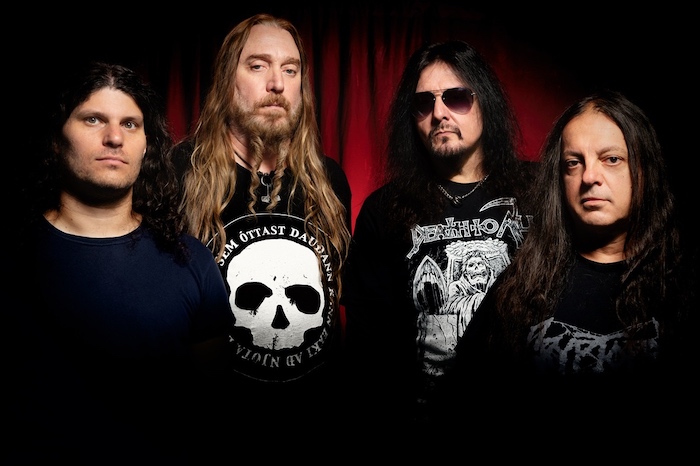
Interview with Gene Hoglan (Death To All)
Gene Hoglan needs no introduction. One of the most influential drummers in the history of extreme metal, the American musician has built a career defined by groundbreaking performances, a highly distinctive rhythmic language, and a decisive role in albums that pushed the boundaries of the genre - whether with Dark Angel, Death, Testament, or projects such as Strapping Young Lad. This month, Hoglan returns to Brazil leading Death to All, a tribute project formed by former members of Death, to celebrate live two absolute milestones in the band's catalog: Spiritual Healing (1990) and Symbolic (1995), which mark their 35th and 30th anniversaries, respectively. The tour visits five cities between January 20 and 25.
More than a nostalgic celebration, the shows offer a deep immersion into two fundamental phases of the artistic evolution led by Chuck Schuldiner - from the still visceral, technical, and socially incisive death metal of Spiritual Healing to the progressive, melodic, and almost philosophical refinement of Symbolic. In this exclusive interview, Hoglan reflects on the weight and responsibility of carrying this legacy on stage, examines the aesthetic ruptures introduced by Schuldiner, recalls his creative collaborations with figures such as Devin Townsend and Dave Lombardo, discusses his formative influences - including Kiss - and delves into rarely explored topics such as the narrative role of the drums, the emotional control demanded by certain songs, and the personal turning points that shaped his artistic identity. An extensive, technical, and revealing conversation - befitting the historical importance of Death and one of its most emblematic rhythmic architects.
Marcelo Vieira (@marcelovieiramusic)

Spiritual Healing and Symbolic represent two very different moments in Death's evolution - one still rooted in classic death metal, the other already deeply progressive. How does the physical and mental experience of playing these two albums back to back differ for you?
Well, you know, when it comes to playing these albums, my main goal is always to represent the material as faithfully as possible. From a drumming perspective, that means honoring the original performances - in this case, Billy Andrews' drum parts - and, ultimately, honoring Chuck Schuldiner's music in the most respectful and coherent way we can.
As a band, what we try to do is put our own individual stamp on the performance while still deeply honoring the original material. If you watch any recent live videos from these runs of Spiritual Healing and Symbolic, you'll see there's a lot of energy in the performances. Our focus is simple: play the songs as powerfully and authentically as we can. That approach applies equally to both albums.
For you personally, what is the greatest responsibility involved in carrying this legacy on stage?
I'll freely admit that when I'm playing material originally recorded by other Death drummers, I try to be as spot-on as possible. That includes Sean Reinert, Richard Christy, Billy Andrews, and Chris Reifert. I really do my best to honor what each of them brought to the band.
I remember back in the day, when we were playing a lot of these songs live, I asked Chuck, "What do you want my approach to be? Should I follow the albums exactly?" And he said, "Man, just be you. Put your own stamp on it." He told me I was there because he liked my playing and wanted me to feel comfortable and happy playing the songs.
At that point, this was before Richard came along for The Sound of Perseverance. The album before I joined was Human, so representing Sean Reinert's work was a challenge - but a wonderful one that I was happy to take on.
Chuck gave me a lot of freedom. He basically said, "Do what you want with the songs." I didn't change anything structurally, but I added some flavor and energy. For the most part, I still play the parts as they were written, just with a lot of live intensity.
And I think that comes across to the audience. They see that we're having a great time on stage, and that energy gets exchanged all night long. Every show becomes this incredible night of metal, and that's something you can count on every time.
Is there a song from either album that you find especially challenging - not because of speed or complexity, but because of the level of emotional control involved?
That's always been a bit of a sticking point for me. Sometimes, when the live energy kicks in, I have a tendency to push songs that really should sit back and groove. A lot of drummers struggle with that.
A good example is "Altering the Future" from Spiritual Healing. My instinct is to lean into it and play it aggressively and fast. But that's where Bobby Koelble might step in and say, "Hey, let's pull this back a bit." He used a great word for it - something like making it more "moody." That really clicked for me. Even though parts of the song make me want to push forward, the challenge is holding it back and letting the atmosphere breathe.
Mentally, revisiting material from Symbolic or Individual Thought Patterns doesn't intimidate me. I've played these songs before - I know I can play them again. Even if I haven't touched a song in decades, I trust that muscle memory and experience will kick in.
What matters more to me is properly representing the other drummers' contributions. I'm not precious about my own parts. I follow them closely, but if a small lick has evolved over time, I don't obsess over it. I'm not trying to impress myself.
The real question is: Does the song work? Does the album work? Does the concert work? Those are the things that matter most.
Death is often cited as a band that redefined the boundaries of death metal without ever losing its identity. In your view, what was the most significant aesthetic rupture Chuck introduced?
The most significant aesthetic rupture… that's a great phrase. Honestly, it sounds like it could be a band name. Aesthetic Rupture - I remember seeing bands like that back in the mid-'80s!
But seriously, I truly believe Death played a crucial role in shaping three major phases of extreme metal. First, there's the inception of death metal itself. Death was right there at the beginning alongside bands like Mantas, Possessed, Slayer, and all the foundational influences - Venom, Motörhead, Hellhammer. Death helped define what death metal became.
Then, a few years later, with Sean Reinert and Paul Masvidal, Death helped put technical death metal on the map. They weren't the first - bands like Atheist and even Mekong Delta were already exploring that territory, and of course Watchtower were the true ground zero for progressive and technical metal. Back in the '80s, I used to call that stuff "techno metal," before that term meant anything else.
With Human, Death added something essential to that movement. And later, with Individual Thought Patterns and Symbolic, Chuck helped lay the foundation for melodic death metal. He was very open about the fact that he wasn't the same songwriter anymore - that he didn't want to keep writing the same brutal, gory material forever.
Chuck made it clear: he could only write from the heart and continue evolving. Fans could either evolve with him or not - but he wasn't going to stand still. That mindset eventually led to Control Denied as well.
So Death left three massive fingerprints on the evolution of death metal. And there's a big difference between stepping into a style that already exists and actively creating new pathways within the genre. Death - and the bands closely surrounding them - were doing exactly that, and those innovations still shape metal today.
Kudos to Death. Kudos to Chuck. Absolutely.
Besides working with Chuck Schuldiner, you also worked extensively with Devin Townsend - two very contrasting creative worlds, one might say. What most clearly distinguished them as leaders and songwriters?
From a songwriting standpoint, I think Chuck liked to keep things fairly simple. He was always rooted in traditional metal and focused on refining his earliest influences, pushing them forward in a very deliberate way. That was always central to Chuck's approach.
With Devin, on the other hand, even today he's fully immersed in whatever he's into at the moment - and that doesn't mean he'll be writing the same way a year from now. Devin seems to exist in a constant state of creative flux; his mind just never stops. When we worked together, I always knew that even if he was only showing me a very basic, bare-bones guitar riff, he was already hearing the entire song - the full arrangement - in his head.
That really influenced me. I've tried to take that same approach into my own writing: hearing the whole piece, not just "here's my guitar part and here's your drum part," but understanding the song in its larger context. Devin is truly a master at hearing an entire, almost symphonic composition fully formed in his mind as he's creating it.
In which of those creative environments did you feel greater freedom as a drummer?
Honestly, both. Both Chuck and Devin were very much like, "Hey man, do your thing." They wrote differently, but they both trusted me completely and encouraged me to bring my own voice to the music. They'd say, "That's why I love working with you - everything you come up with is killer."
With Death, I would hear Chuck's riffs and actually learn them on guitar myself - I play guitar too - and that really helped me internalize what I was hearing from a riff tape or from him just playing a few parts. That made it easier to lock into the pulse, understand where the beats landed, and shape the drum parts accordingly. I could do that with both of them.
Devin was also an amazing drum programmer. For example, on City, he programmed the demo drums himself, and those templates were incredible. Some of it was very machine-like, but he handed me the cassette tape - this was back in those days - and I thought, "These programmed drums are killer." I'd use them as a template and become the live, human version of what he had already created. He gave me a fantastic starting point, and I love it when artists do that.
Other times, people will say, "I can't program drums at all, so here's the most basic thing possible - do whatever you want." And I'm perfectly fine with that too.
I did some homework and found out that you learned to play drums listening to Kiss. What elements of Kiss do you still recognize in your playing today?
My first real favorite drummer was Peter Criss. When I was a kid - I was still in single digits - I read all the music magazines, and they constantly described Peter as a jazz-influenced drummer, not a straight-ahead rock drummer. At the time, I didn't really understand the difference, but it opened my mind.
It made me realize that even if you want to be a rock drummer, you should stay open to other influences. Peter wasn't just saying, "My influence is Ringo Starr." He talked about jazz players like Gene Krupa and classic swing music. That idea - being open to influences outside your immediate genre - really stuck with me.
So yes, Kiss may be the world's greatest rock and roll band in some people's eyes, but for me, their drumming approach taught me to keep an open mind and allow different musical influences into my playing.
Dave Lombardo often cites you as an influence, though you tend to downplay that idea. Where do you draw the line between informal exchange of ideas and genuine artistic influence?
If Dave says that, that's actually news to me - I don't do ego searches online. But if he's said that, it's very kind of him.
We were both really young at the time. I was 16, he was 18, and neither of our styles was fully formed yet. Dave was trying to elevate his playing and was struggling with some double bass ideas. I happened to show up at their rehearsal that day, and he asked for help. I jumped on his kit - which, by the way, was the first double bass kit I ever played - and started throwing out ideas.
We exchanged a lot of concepts that day. He had to be the one to actually execute them, though. On Slayer's first recording featuring double bass, Haunting the Chapel, what he did was incredible - especially considering this was 1984. Back then, that level of sustained speed and control was next-level. Dave deserves full credit for elevating the role of double bass drumming in extreme metal.
When you join a new project, what changes first in your mindset: your rhythmic vocabulary or your attitude?
Definitely the attitude. Most of the time, I'm joining an already established band rather than starting something from scratch. My priority is always to serve the songwriters and make sure everyone involved is happy with what I'm contributing.
If a band sends me demos with programmed drums and they're really well thought out, I'll ask them: "Do you want me to do my thing, or do you want me to play exactly what you've programmed?" Either way is fine with me. Sometimes they want my interpretation; other times they want the programmed parts brought to life by a human player. That's a win-win situation.
I always try to stay approachable and flexible. Emulating another person's style or even a drum machine is easy. What's harder - and more rewarding - is creating beats that no one else would think of. That's where records like Symbolic, City, and a lot of Dark Angel came from for me.
So if someone wants to make my job easier by giving me great ideas upfront, I'm absolutely all for it.
Over the course of your career, do you feel that your drumming has taken on a more narrative role within the music - almost like an additional voice?
Absolutely. I really felt that on Symbolic. We often referred to those parts as "lead drums," almost like a lead guitar. If you listen closely, the riffs themselves are fairly straightforward - melodic, catchy, and solid as hell. But all the rhythmic motion happens around those riffs.
Even going back to Human, the drums are constantly moving over these very strong guitar foundations. And the bass is right there with the drums, especially with Steve Di Giorgio. He and I were essentially the rhythm machine - the rhythm section of the apocalypse, if you will.
So yes, the drums really guide the narrative. Early on, when drum kits first started being used in rock and roll, the idea of drums carrying narrative weight was unheard of. Before that, in swing and jazz, drums had a different function. Rock brought an entirely new role for drums into the equation.
If you look at how drums have evolved over the last hundred years, it's pretty astounding. There's a great book by drummer Daniel Glass called The Century Project that breaks this evolution down beautifully. Today, drums are very much a narrative force. People talk about drums "driving" a song - and in many cases now, the drums are the song.
You hear a lot of extreme bands where the guitar riffs are fairly simple and chunky, but the drums are absolutely going insane. Of course, there's still plenty of music where the guitar is doing the wild stuff, but in a lot of modern metal, if you reduce the drums to a simple groove, you lose the entire identity of the music. The relentless speed, the nonstop double bass - that's what defines it. So yes, drums absolutely guide the narrative.
Among all the albums you've recorded, which one do you see as a personal turning point - not necessarily the most famous, but the most transformative for you as a musician?
That's a tough one, but I'd probably start with Darkness Descends. It was my first album, and even then I was trying to write drum parts that hadn't really been heard before. In thrash metal, a lot of the basic templates already existed - created by guys like Lars Ulrich, Bill Ward, and coming out of early punk influences. Those foundations were already there.
What I started trying to do was expand on those ideas - fragmenting double bass patterns, for example. At the time, I hadn't really heard kick drums used in patterned, fragmented ways like that. Sean Reinert even pointed that out once, saying, "I'd never heard a double bass pattern like that before," referencing things like "Death Is Certain (Life Is Not)" or the intro to Darkness Descends.
Ironically, Darkness Descends was also my first real exposure to fully developed double bass drumming as a listener, and I remember thinking, "Wow - okay, this is something new."
That said, my time with Death was a massive transformation for me. In Dark Angel, I wore every hat - main songwriter, riff writer, lyricist, frontman. With Death, my only responsibility was to be the drummer. That freed me up to focus entirely on drumming and really level up my playing.
It pushed me to create drum parts that weren't just variations on existing templates, but genuinely new patterns and ideas. I let my influences show very clearly. Am I a drum thief? Of course. We all are. I've stolen from plenty of drummers - and I've always been open about where those influences came from.
Can you pinpoint a moment when you realized you had developed a recognizable drumming signature?
Honestly, that came much later - and mostly from other people pointing it out to me. I was just trying to be a cool drummer, coming up with interesting beats. If no one else had played them before, great - but that wasn't my main goal.
What really hit me was when other musicians started breaking down my playing for me. I'd have people coming up and saying, "Did you realize you do this?" or "Did you notice that pattern?" And then I had absolute legends - not just in metal, but jazz fusion icons - analyzing my parts in detail.
They'd ask things like, "Why did you play this here?" or "What were you thinking in this section?" Meanwhile, I'm losing my mind just because they even know who I am. They're analyzing my beater angles and foot technique, and I'm thinking, "You're a legend - how is this happening?"
Moments like Sean Reinert pointing out specific ideas in my playing really made it click. I'd think, "Wow, I never even consciously thought of it that way." There were also times when I did something simply because I'd never heard it before. That doesn't mean it hadn't been done - just that I hadn't heard it.
To wrap things up: after decades of career, what still motivates you to play music with such intensity?
This is all I've ever done. I've never had another life outside of this. From my earliest days on the drums, I gravitated toward the technical, the extreme, and the physically demanding side of music.
So continuing to do this feels completely natural. My motivation now is about maintaining the highest level I possibly can. I fully intend to keep doing this deep into my 80s - and not in a novelty way. Not playing politely in some corner bar classic rock band, but bringing it the same way I always have.
That's the goal. That's what keeps me going.
Link for the original: https://www.marcelovieiramusic.com.br/2026/01/gene-hoglan-death-to-all-entrevista.html
Entered: 1/24/2026 3:07:06 PM
5.01k
Latest Reviews
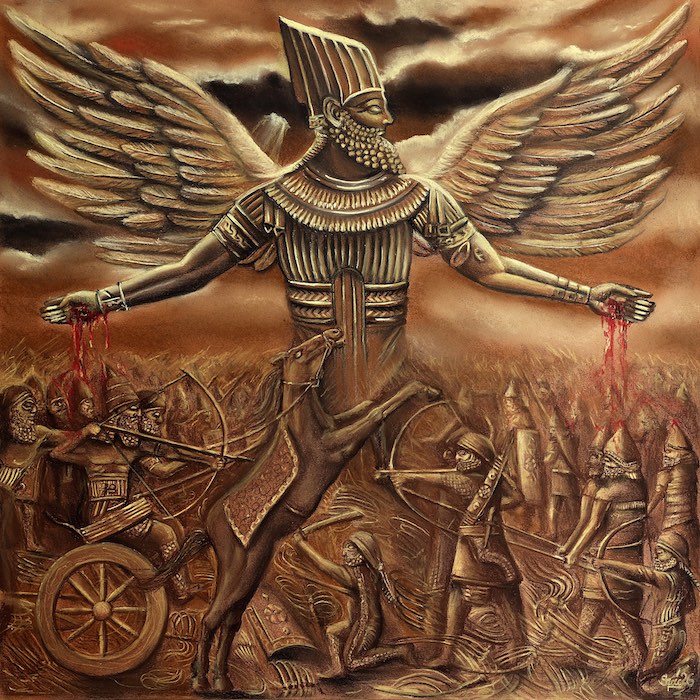 Neolith
(9)
Neolith
(9)
|
|
Neolith
(8)
|
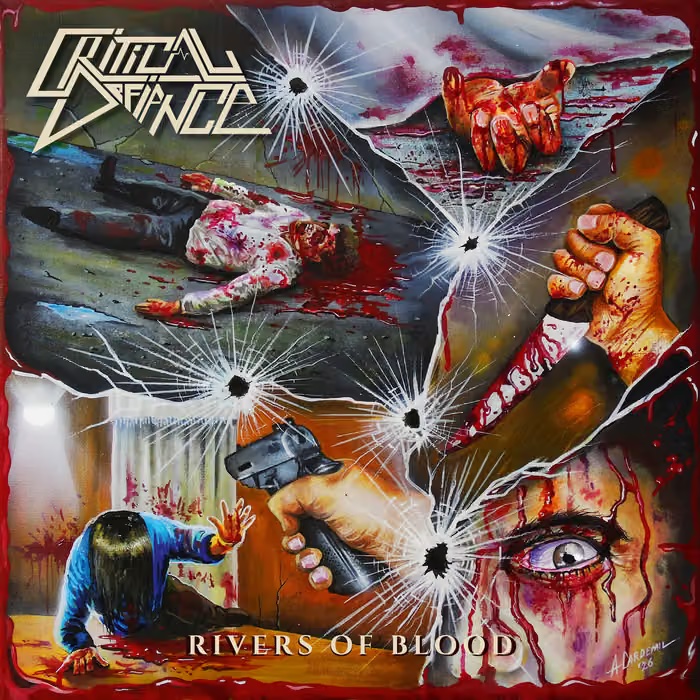 Critical Defiance
(9.5)
Critical Defiance
(9.5)
|
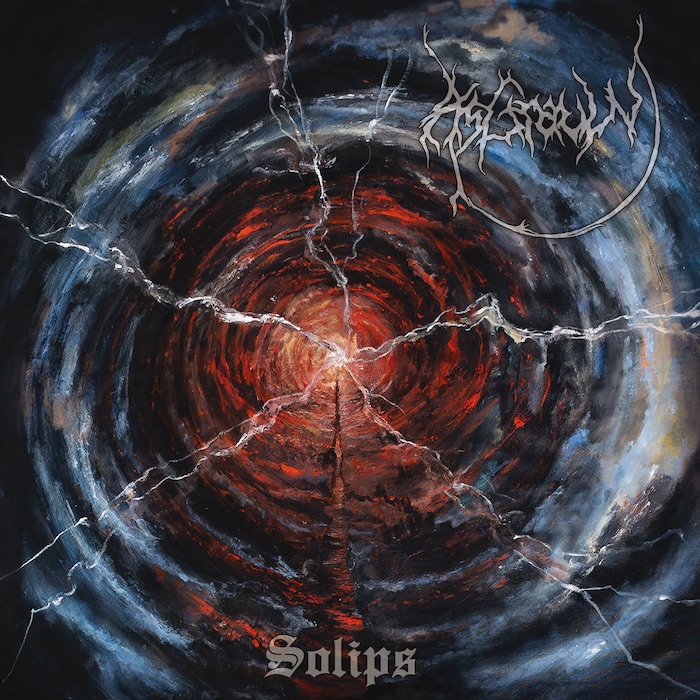 Asgrauw
(8.5)
Asgrauw
(8.5)
|
 Master
(9.5)
Master
(9.5)
|
 Sněť
(9)
Sněť
(9)
|
 Hanternoz
(8.8)
Hanternoz
(8.8)
|
 Taake
(7.5)
Taake
(7.5)
|
 Eternal
(7.7)
Eternal
(7.7)
|
 Malum
(7)
Malum
(7)
|
 Sardonic Witchery
(9.5)
Sardonic Witchery
(9.5)
|
 Behemoth
(8)
Behemoth
(8)
|
 Night Hag
(8.5)
Night Hag
(8.5)
|
 Chamber Of Unlight
(7.9)
Chamber Of Unlight
(7.9)
|
 Sigh
(9)
Sigh
(9)
|