
Sanctuary - Interview
Better late than never: Sanctuary is finally set to make its debut on Brazilian stages. Could—or should—this have happened sooner, back when vocalist Warrel Dane was still alive? Yes, of course. But his replacement, the incredibly versatile Joseph Michael, helps stave off inevitable comparisons as the band looks to the future, with a new album on the horizon and a preview of it already included in their live set. A month after speaking with Joseph , I had the opportunity to have the conversation you are about to read with none other than Lenny Rutledge—guitarist, founding member, and (despite his humility and approachability leading him to reject the label) a true legend of American metal.
Marcelo Vieira (@marcelovieiramusic)

Sanctuary will finally play in Brazil for the first time on August 30, 2026, after four decades of history. How does it feel to finally reach a country where the band's music has had such a long-lasting underground following?
Lenny: Yeah, we're really excited about it. We know there are a lot of passionate fans down there in Brazil. And, of course, we have a lot of connections there because Warrel was down there a lot. I would always talk to him when he was there, and he had his solo band down there and everything. So, yeah, we've heard a lot of great stories about Brazil and the people there.
This will actually be your first visit not only to Brazil but to South America. What have you heard about the Brazilian and South American metal audiences over the years, and what are you expecting to discover for yourself?
Lenny: That they're very passionate and really, really into metal. They really get into it, so we're looking forward to it.
Would you rather approach the Brazilian show as a celebration of the band's history or as the beginning of a relationship with a completely new audience?
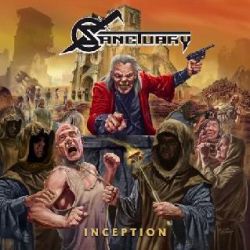
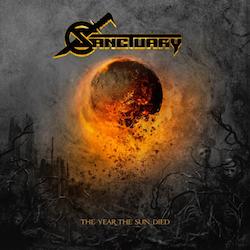
Lenny: Definitely both. You know, there's obviously a lot of music that we want to celebrate and share with everybody, from the past and the future. Honestly, we're only going to be playing one song while we're down there, but I know it's a different configuration of the band. There's a lot of stuff that we're going to be playing that we haven't played in a long time, and there were some things that were a little more of a struggle to play. But you're going to hear a ton of old stuff from Refuge Denied and Into the Mirror Black. The bulk of the set is going to be that. You're also going to hear three songs from The Year the Sun Died and one new song from the upcoming release.
Twelve years have passed since "The Year the Sun Died". What made 2026 the right moment for Sanctuary to finally feel that there was a strong artistic reason to return to the studio?
Lenny: Well, we're getting closer. You know, sometimes it takes us a while to finish everything that we've been working on. And so we're getting a whole lot closer to the end. We're actually going to finish it up this year, and it's going to be released toward the beginning of next year. There's a possibility that it's going to be called Transmutation; that's the working title.
"Not Of The Living" is being presented as the first step into a new chapter. What does this song represent to you personally within Sanctuary's history?
Lenny: Well, I mean, it's some growth. Obviously, there are some differences there, too, but we try to do that with every album. We try to show a little bit of growth, from Refuge Denied to Into the Mirror Black to The Year the Sun Died. And I think we're headed down that path with this new record as well. I mean, obviously, the main difference is that Joseph is singing on it instead of Warrel. But we're still trying to retain the legacy of Sanctuary as well.
Joseph Michael has described "Not Of The Living" as one of the more straightforward songs among the new material. Why did you feel this was the right song to introduce this new incarnation of Sanctuary to the world?
Lenny: Well, I don't know. It just resonated with us, and we felt like it was a good song for that. A lot of times, when you have a batch of songs, some of them stick out. We recorded some of this record in sections, and in the first section we did three songs. That song kind of stood out as one of the first songs we'd like people to hear. We felt like it was a strong song and kind of showed where we were going.
This is the first new Sanctuary material since Warrel Dane's death. How do you find the balance between acknowledging his enormous importance to the band and avoiding turning every new step into a comparison with the past?
Lenny: Yeah, it's hard. It's hard to do. I think that, depending upon the person or the listener, there are always going to be comparisons. I'm probably guilty of it myself. But, you know, we're just trying to live up to what we feel is music that we enjoy, and hopefully we can make it so that other people enjoy it as well. That's the first thing for us: we just try to make music that we really like.
At the same time, like I said, we're trying to retain the legacy of Sanctuary. We don't want to go too far out and change the band into anything bizarre or anything. We know that we have parameters that we're going to stick within, for the most part.
Joseph Michael obviously isn't trying to "be" Warrel. What has he brought to Sanctuary that you didn't realize the band needed until you heard him singing these songs?
Lenny: Well, I mean, one good thing is that he has a lot of different vocal qualities. We have some stuff that we're working on that's not as clean vocally. Sanctuary has always had a lot of clean vocals, but we're actually experimenting with some stuff that's not so clean—not a whole lot, but a little bit—just because we think some of that stuff is cool, and we like it.
And we like the fact that Joseph can span the ranges, from all the way back to Refuge Denied to some of the lower stuff on The Year the Sun Died. So we appreciate all the range that we have there.
The enormous gaps between Sanctuary albums are part of the band's history. Does that affect your relationship with songwriting?
Lenny: It probably does, because from 1990, when Into the Mirror Black came out, to 2014 and The Year the Sun Died, obviously some things changed. I was telling somebody this story the other day: from 1999 to 2009, I didn't play electric guitar at all. I only played acoustic guitar for ten years. So a lot of that changed the way I think about things and the way I play as well.
When Sanctuary got back together, I had a different way of looking at things, and I think that kind of shaped the way I wrote after that period. It made me look at things differently. I feel riffs a little differently because of that ten-year break I took, but it was a little bit of work to get back to that point.
Do you feel a greater sense of freedom because you have never been a band that had to constantly produce new records?
Lenny: Yeah, I don't know. I guess we're just a little bit slower. One of the reasons why it took us so long to put out The Year the Sun Died is that we broke up for 20 years. There's that. But this time, we've just taken a long time. There have been some things that have happened along the way—family, COVID, other things, and Warrel passing away. Sometimes life gets in the way, and sometimes those things are a little bit more important. I mean, music and metal are important, but sometimes you have to lean into those other things, I guess.
Is there something specific about the way Warrel wrote, sang, or approached a song that still influences your decisions?
Lenny: Yeah. I mean, he was a bit of an enigma. That was the thing: I was always trying to figure out what he was writing about. A lot of times, he really wouldn't talk about it. Sometimes he would, but there were definitely things that he would explain, especially when they were about a specific topic.
We had a few songs—at least one—that were about a book or a movie, you know, that type of thing. You don't always know that when you listen to them. For instance, "Soldiers of Steel" is actually a song about a book and a movie called The Keep, by F. Paul Wilson. It's a really good movie and a really good book. So, if people are interested in knowing what "Soldiers of Steel" is about, that's it.
I love that kind of thing about Warrel. He always had these really deep subjects. They were very thoughtful and very deep.
There is a fine line between honoring the past and becoming trapped by it. How do you recognize when a new idea is genuinely moving Sanctuary forward rather than simply reproducing a formula that worked decades ago?
Lenny: Good question. I don't know. I'm sure there's a little bit of both. Being the main riff writer, I'm sure there's stuff that I probably inadvertently regurgitate. A lot of times, we go through a process where we'll check ourselves, and somebody in the band will say, "You know, that sounds a little bit too much like this or that." So we do that. In fact, that comes up a lot.
A lot of times, you find out that you may be plagiarizing one of your own riffs. We definitely don't want to plagiarize somebody else's riff, but sometimes you don't even realize it. We've actually had pieces that we've removed from our songs just because they sounded too much like one of our own riffs from earlier in our career.
But there's also the other side of it. You have AC/DC—AC/DC sounds like AC/DC. A lot of their songs sound the same, right? I mean, they do have a brand. So I feel like Sanctuary has a brand as well, and a lot of bands do. You're going to end up having things that sound similar within a certain vein, I guess. So I hope I answered the question.
"Refuge Denied" and "Into the Mirror Black" have become landmarks of American metal. When you write today, can you actually forget those records, or are they inevitably sitting on your shoulder?
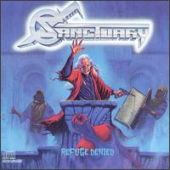
Lenny: I love the energy of Refuge Denied. So there are times when I try to replicate that. It's really easy for me to write dark, slow, almost Sabbath-y type of stuff. I could do that all day long. So there are times when I have to remind myself that we wrote Refuge Denied and that we need that energy.
It's the same with Into the Mirror Black. Mirror was a little darker and a little different, with maybe a little less energy but more intensity. So I do think about that at times, yes.
The new album will inevitably be heard in the shadow of "Refuge Denied", "Into the Mirror Black", "The Year the Sun Died", and, of course, Warrel's legacy. What do you want listeners to understand first when they hear the complete new record?
Lenny: All I can say to everybody is: give it a chance. Give it a listen. I always say, give it a couple of listens, because I can't tell you how many times somebody has come up to me and said, "Hey, I heard 'Not Of The Living' and I wasn't sure about it. Then I heard it three or four times, and now I love it."
Sanctuary is celebrating its 40th anniversary at a very particular moment in the band's history. When you look back at this entire journey, what do you still feel Sanctuary has to prove—to yourselves rather than to the audience?
Lenny: Oh, well, I mean, that we can do it. That we can still do it and that we can still survive, still go out there, and make great music. We'll probably do it as long as people come to our shows and continue to support us.
I mean, that's really a lot of it. To go out there and share the music with fans who love it, and to see that happening—that's the magic right there.
Is there any Sanctuary song that you now hear differently because of everything that has happened since Warrel's passing?
Lenny: That I hear differently? I don't know. There are definitely songs that we play that sort of bring up emotions for us when we play them. There are certain songs that Warrel would, you know—we play "Epitaph" right now, and it's a song that we didn't play a lot for many years. We've been playing it, and we're going to bring it down with us to South America, along with "Veil of Disguise."
"Epitaph" kind of brings up some emotions for me because Warrel and I's dads—each of our fathers—passed away when we were younger, and that's kind of what that song is about.
 657
657
Discography
Upcoming Releases
- Messier 16 - Shouts From The Cliffs Of Heterodoxy - Oct 23
- Bokkerijders - Crush Kill Destroy - Oct 23
- Fvneral Fvkk - Indecent Idols - Oct 23
- Critical Defiance - Bloodsurge - Oct 23
- DET - Bloodsurge - Oct 23
- Anagnorisis - Caregriever - Oct 23
- Wolves In The Throne Room - Estuary - Oct 23
- Eldfödd - The Night Belongs To The Dead - Oct 30
- Mastic Scum - Void - Oct 30
- Αχεροντας - For The Blood Of Tiamat - Praxis I - XXX Years Anniversary Of Magick And Metamorphosis - Oct 30
- Vigil - Primordial Rites - Oct 30
- Deathwards - Realms Of Sin - Oct 30
- Paara - Laulut Tulen Ja Jään - Oct 30
- Ereboros - From Oblivion To The Grave - Oct 30
- Cryptorium - Through The Bowels Of Ceaseless Dissonance - Oct 30
- Xentrix - Allied With The Enemy - Oct 30
- Arckanum - Beswærilsin - Oct 31
- Powermönger - Powermönger - Oct 31
- Boor - The Stones Hold All Echoes - Oct 31
- Dantalion - Dantalion - Nov 01