
Immolation - Interview
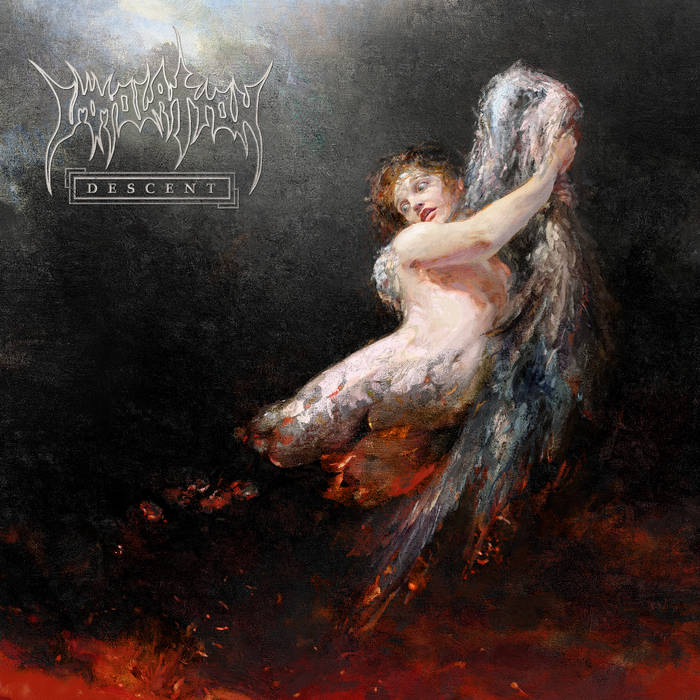
There are still four months to go, but anticipation for the joint Latin American tour featuring Testament, Municipal Waste, and Immolation is already sky-high. Brazil will host five dates: Curitiba (Dec 5), São Paulo (Dec 6), Limeira (Dec 8), Belo Horizonte (Dec 10), and—to the surprise of many—Rio de Janeiro (Dec 13). This will mark the fifth visit to the country by these death metal veterans. Although their previous tour was recent, this new run serves to promote the newly released and acclaimed "Descent". Guitarist and founder Robert Vigna discusses the album with the excitement of a child who has just received a new toy.
Marcelo Vieira (@marcelovieiramusic)

"Descent" is Immolation's twelfth studio album, yet the band still sounds unmistakably like Immolation without simply repeating the formulas of the past. How conscious are you of the balance between preserving the band's identity and finding new territory as a songwriter?
I guess, yeah. Well, you have to be. You have to watch out for repeating yourself or trying to sound like anything else. It becomes more difficult the more songs you write and the more albums you release, you know? It gets harder and harder. But luckily, I just try to write stuff that sounds cool. Then, once I'm done with certain things and I send them out to the guys, I rely on Ross or Alex, who are more in tune with the older stuff, you know, and Steve, of course. If it sounds like anything else, they're kind of like my police, so to speak.
But, you know, you just try to do the best you can to come up with interesting-sounding stuff and go from there. I mean, there's really not too much of a formula in the sense of, like, "Okay, we're going to try this now. We're going to try something like that." It's just, "What do we come up with?" And then, if something sounds cool, we make it work. Or if it's something like, "Okay, this is a little different, but I think this could be cool," then we're good, you know?
But that's it. It's not like we go out of our way to say, "Okay, we're gonna do this. This record's gonna sound like this now." You know, it doesn't work that way.
The album title, "Descent", suggests a movement downward, while songs such as "False Ascent" and "Bend Towards the Dark" seem to reinforce that imagery. What does "descent" represent to you in the broader conceptual world of the album?
Yeah, well, the concept basically runs through the whole record, but mainly that song as well, which wraps up the record. It's really looking at everything going on around us today, as we always do. We're always just looking at what we see in the world and kind of reflecting on it, talking about it, bringing it to light, bringing the darker side of mankind to light.
In general, the song "Descent" just looks at really where we are today and how we've kind of... We're at a place now where, I know, we're starting to repeat stuff from the past that we shouldn't be, but we're also heading into some areas that we've not quite been before, I think. And that's kind of what that song is about. It's just about saying, "Hey, what are we doing here?" Because, you know, it seems like these days the world is a very... Everywhere you go and every subject, it just seems like everyone's at opposite ends of everything. Everything has become extreme, you know what I mean? Way too much. Less talking, more hatred, more anger, you know. So it's just a crazy place.
And I know we've done plenty of that in the past in our history, but it just seems like we're repeating certain points of that that people should realize by now never got us to a good place. So why are we doing that again, you know?
So, basically, that's roughly, in a nutshell, what the album looks at.
Immolation has always dealt with religion, power, humanity and the darker aspects of existence, but the band's lyrics have never felt like straightforward political or religious statements. After more than three decades of writing within this universe, where do you still find new ideas to explore?
I guess it's a little bit of both, but at the same time, there's a lot of stuff out there, so it's easy in that respect. It's just a matter of, well, you know, there are times when you're like, "What angle are we going to take? What are we going to do a little differently?" You know what I mean?
So, like, "The Ephemeral Curse" was cool because that kind of looks at humanity in general, basically explaining how small we are, you know? All the stuff we go through, but we mean nothing in the universe. You know, that's kind of what that song's about, in a nutshell.
So, you know, there are certain aspects you try to take different turns on, but I mean, there's plenty of the basic ideas and other darker things to go around to come up with stuff. Trust me.
I think, with the music, the more you've done, the harder it gets. But Ross and I always keep a lot of different ideas and concepts around, whether it be a title, one word, or a line or lines I've come up with when I'm writing the stuff. And then you take those and say, "Okay, what fits with what song?" Or, "This idea sounds cool. This song's a good song for this." You know?
So we just take it from there. That kind of makes it easier, and then we bounce things back and forth to each other. And that becomes the more... As stressful as it is, it's still the fun, the more fun part of writing, because the music—the hard part of the music—is done. The ideas and things we want to explore are there, so it's just a matter of kind of connecting them to the songs and then coming up with the lyrics.
Luckily, with that, you can do things at the last minute, or you can just brainstorm and come up with a bunch of stuff in one shot. So it's a little easier for me to write that stuff than it is the music itself. The music is always a little harder for me.
Immolation's guitar language has always been remarkably unconventional, with dissonant intervals, unexpected chord movements and riffs that often seem to work against traditional death metal structures. When you are writing, do you approach the guitar as a source of melody first, or are you primarily thinking in terms of atmosphere, tension and rhythmic movement?
It's usually more about the atmosphere, the feeling, you know what I mean? Like, whether I'm writing riffs, it doesn't matter if it's basic, if it's technical, or if it's something else. It's like, whatever sounds interesting or cool to me, that's what I go with.
It could be the most basic of things, but if it sounds cool, I'm like, "Okay, that sounds kind of basic, but it also sounds very cool, so I'm just gonna..." On my computer, I'll put drums to it to get an idea of what I want it to sound like, and then I'll put it to the side. And I'll do that with all the other parts, too, and eventually find parts that connect together. Or you come up with a part that you think can carry a song, and then you take that as your main thing and work around that.
But yeah, to me, it's more about the feeling. That goes for the solos as well. I've never been one to be like, "Okay, I have to really do some crazy solo here. I gotta show off," or whatever. You know, it's not that for me. It's more about what fits the music.
There are a lot of times when I do solos that are more rhythmic, that go along with the rhythm to carry a song to a certain point. Or if Alex and I are working on solos, he might do a solo and take a certain approach to it. So if he's doing that, I'll answer it with something a little different. This way, you have a little... You know, it's not like, "Okay, he's doing something crazy, I gotta do something crazy." It's like, "Okay, he did that. It's got a lot of emotion, so let me do something that's more laid-back," or vice versa, you know? So they kind of carry each other.
That's all it is to me. It's always about the feeling, no matter what it is—rhythm, solo, or anything else.
"Adversary" was the first song released from the album, and you also directed its video. Did you already have a visual concept in mind while writing the song, or did the music inspire the imagery afterward?
We had the music first, obviously, and then that was one of the first songs we put lyrics to. I happened to see "Adversary" written down in one of our notes, you know, and I said, "Okay, that's a pretty aggressive song. It kind of would fit that, I think." So I was like, "Let's go with that," and then just started writing from there.
And then, once the song was done and we were thinking about video tracks, that one came up, obviously. And yeah, we did have a couple of concepts in the sense of, "All right, I think we could put us in this kind of scenario." So that was my thought for that song.
You know, the videos—we actually shot all three of them together in the same weekend. So we had to kind of have somewhat of a concept. Luckily, the Adversary concept was there, so I was able to get the lighting to work for that particular concept. And then I did different lighting and looks for the other two songs, kind of not knowing what I was doing exactly for those.
But I tried to, you know, basically, when filming the band, I wanted to at least have three different looks so I could create three different videos with that. But yeah, Adversary—we kind of had the fire idea for sure, and then, you know, brought it on from there.
Luckily, it worked out, because when you're shooting and you're doing something specific—which I normally don't do—I'll shoot with certain lighting, but I won't do something as specific as we did with that kind of flame look. So that was kind of hit or miss. You know, if it didn't work, we're like, "All right, well, we're gonna have to figure something out here." But it worked out really good, and the video, you know, everything kind of came together on that one.
You also directed the videos for "Attrition" and "Bend Towards the Dark." What do you find creatively satisfying about working with images in addition to music?
It's interesting. I mean, it's something I slowly got into because I worked for a production company in Brooklyn, New York, for many years, where I not only programmed moving lighting fixtures and did that kind of production work, but we also did some minor video stuff on a small scale.
But then, as I worked with other video guys like Tommy Jones, who did our first couple of videos with Nuclear Blast, and saw how he did things, and then worked on other videos... Little by little, we had to do one with a project Ross and I were working on called Gospel for the Witches with Karen Crisis from Van Crisis, from back in the day. She and her husband had this new band, and Ross did some vocals on the first record, and I played guitar live. We played a few shows live, but she wanted to do a video, and they had ideas and a concept.
So, at that point, I said, "Okay, let me give it a shot." Because I'd done minor video stuff for weddings and events and things like that, so I knew roughly what the tools were and had some basic knowledge. But going forward, I just kind of thought, "Let me just give it a shot." So we did it, and it came out pretty decent.
And then, from that point on, when Atonement came out, that's when I started working on videos for the band.
And yeah, it's fun. You know, we kind of do everything on our own. We'd help some friends and stuff, but for the most part, it's just us recording everything. I'll come up with some ideas, but a lot of times I'll... We'll film the band, and I'll figure the rest out later, you know?
But it's interesting. It's fun. I enjoy it. Like, same thing with the music, it's kind of fun to try and create stuff for the music that you've created, you know what I mean? And try and create some kind of visuals.
So I find it interesting. There's always stuff that I wish I had done better or whatever, but it's a learning process for me. And over the years, it's gotten a little bit better, and I've been able to learn more. But I still have a lot more to learn, especially with all the new technology out there now. So I have a little catching up to do.
But, you know, I try and keep as current as possible. It's always a learning process, though, but it's a fun one.
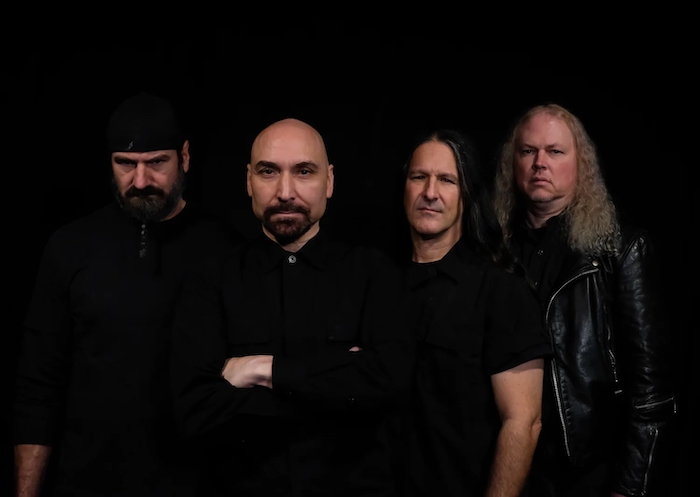
"Descent" features Zack Ohren as producer, mixing engineer and mastering engineer. What did you want to achieve sonically this time that perhaps you felt was missing from previous Immolation records?
Well, the last two records we liked a lot. I mean, I thought Atonement came out really cool. It had a really good... You know, Kingdom of Conspiracy, and I think Atonement was a good... You know, kind of like, from that point on, it was better in the sense that we had a more organic sound on Atonement, and that came out really good. It was a little darker-sounding, and then Acts of God was also very cool.
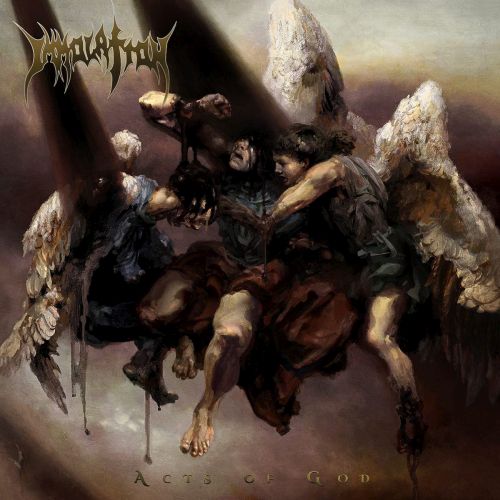
Different from Atonement, but also a really good production. It had a very cold sound to it, which fit the music well. But Zack Ohren, you know, as the years go by, Zack kind of has been more and more familiar with our music.
And with this record, we recorded it very differently. We normally would all go into one space, into a studio, and spend time with each other, etc. with Paul Orofino, who we've worked with since the third record. He had moved the studio down to Tennessee, and we also had a lot of stuff going on in our personal lives at the time. So, you know, it was like we couldn't really all go and meet in one spot.
So we had a local guy here, Justin Passamonte, who has a studio, and we went and did the rhythms, vocals and bass here. Steve recorded his drums close to home, about an hour away from his place in Ohio, with Noah Buchanan, who has Mercenary Studios. He was familiar with him and comfortable doing it there.
So Steve would record his drums and then he'd send us the tracks, and then we'd record to the stuff here. I even drove down to Virginia and got some of Alex's solos and stuff when he was down there. So everything was done in different spots.
But what we got sounded very good. And even though we were still under the gun to get the stuff done, it was a more relaxed feel because I would just go for a few hours a day and come home, you know? It didn't feel like there was the event of being in the studio, which, although we've enjoyed that many times over the years and had great times, this was more like, "All right, I'm gonna go record guitars for three hours and come back," you know? It was very nonchalant like that.
But we had the EVH head in there, and it was nice. It had a good sound, and I just... You know, it was very simplistic. We just jammed stuff out to Steve's drums, and yeah, all together it came out great.
And I think Zack, although we had very little time and we didn't really bug him too much, he did his thing, and he just did a phenomenal job. I mean, it's one of the biggest-sounding records we've had. It's very strong and powerful and very large-sounding.
And I think, production-wise, the music, and then the artwork for the cover came out amazing from Eliran Kantor. You know, everything just kind of came together, even though it was a tight window to get it done. But everything came out really, really well, and I'm super happy with it.
One particularly interesting aspect of "Descent" is the participation of Dan Lilker on vocals on "Host" and the title track. What made you choose him for those songs, and what did his presence bring to the material that you couldn't have achieved with the regular lineup?
Just a fun thing we do. He did it on the last record, I know, and he might have done it on... I can't remember. He did something on Atonement, but, you know, I think on the last record he did something at the end of one of the songs. And I think he did it on his phone, and he said, "Oh, you know, maybe you could use this," or something like that.
And then I heard it, and we put it in a certain spot, and I said, "Oh, that's cool. Tell him to do a longer one." So he did it on his phone again, like, whatever, and he just sent it to us, and it worked out.
But it wasn't... It was there, but it wasn't as present as these two are. These were kind of cooler because you can really hear them a lot better on this one.
So we had the last song, "Descent," where I thought it was really cool for him to do a nice scream together with Ross at the end. It was just kind of a cool thing. It added a different layer, you know, because Ross has the heavier side, and Danny likes... I mean, the guy's a thrash legend, but he also loves black metal, and he's into that kind of thing. He wanted to do some of those kinds of vocals, and I was like, "Yeah, go for it, man." And it sounded sick.
So it was that one, and then there was another part in one of the other songs that Ross thought of as well. He's like, "Ah, this would be a cool part for Dan to do something as well." So I was like, "Yeah, awesome."
So those two little parts... They were very quick. He just came by the studio because, again, we were here in Rochester, so he just came by with his wife, Heather, and we just came in. It was very quick. He sat there by the mic, did a couple of things, and it was done.
But it was just fun. It's like a fun thing to do, and it just adds a nice little... Just kind of like a cool little thing to add in there. It just adds what they call "ear candy," you know? It's like a nice little change there for certain parts.
And yeah, it sounds awesome. He did a great job, so it just added a nice little layer to a couple of those vocal lines, which was awesome.
Looking back at the band's discography, do you hear "Descent" as a continuation of the path that began with "Acts of God", or does it feel like the beginning of a new chapter for Immolation?
It just feels like where we are now, you know what I mean? Every album feels that way. I don't think it's the beginning or end of anything.
I mean, I would say more so the last three records—Atonement, Acts of God and Descent—are kind of like... I guess those two led up to Descent, so to speak. But I think after the many years of writing songs and being on the road, we've just gotten more into a certain place where I think we need to be as far as the writing and everything.
The writing's gotten better and better, as far as I'm concerned, with the songs, and the albums are getting stronger as we go. So, to me, that's a good thing.
And, you know, we're going to take it to the next level with the next one, I guess. You know, it's always crazy to get down to a record and start writing when we had Atonement, which we thought was a really good record, and a lot of people liked that one. And then the last record, same thing. You're like, "You know what? Now what do we get here?" Because you always want to try and be at least as good as the last record, you know what I mean?
So you can't really do anything but just do your best and hope for the best, you know?
But yeah, that being said, I think it came out awesome. And it's good to be able to have that twelfth record and just say, "Wow, you know, this is a good one." We love playing the stuff live, and we're super happy about playing all the songs live, you know? It's great.
After twelve albums, countless tours and decades of surviving changes in the metal landscape, what still gives you the feeling that Immolation has something genuinely new to say?
I guess because there's still all these things out there that we see, and, you know, someone else is gonna say them, so why don't we say them? You know what I mean?
There's always gonna be other bands, new music, talking about everything that's going on. So we just continue to do that. And I think with every record, you know, you think, "Well, I don't know what to do here." And then we'll come out with a record like this and think, "Wow, we wouldn't have these nine songs now if we didn't go out there and get it done." You know what I mean?
So it's... It's always cool. Because I'm always happy with the stuff, especially this record. It's like thinking, "Wow, these are great songs. Like, it's cool. We have these now," you know?
And, you know, there's always something to say. There's always something out there. There's always that dark side of humanity. That's always there. And a lot of it keeps happening over and over again.
So we'll continue to talk about those types of things from different angles and everything, because all these things that are out there have gotten progressively worse over the years. So yeah, there's always that inspiration, for sure.
And then just the love of the music, you know? Because in the end, we love music. We love what we do. And it becomes a positive thing, even though we're talking about darker subjects.
You know, ourselves as a band, and I'm sure the bands and the fans that come out to all the shows that go on... I mean, I think it's just nothing but a unifying and positive experience for everybody in the end. So it's always a more unifying thing than anything else.
We talk about all the things that are going on that are separating people, and I think that kind of unifies us because we all have the same ideas.
 923
923
Discography
More Interviews
with Robert Vigna (guitars) On 4/8/2019
with Robert Vigna (guitar) On 2/25/2003
with Robert Vigna (guitar) On 2/16/2001
Upcoming Releases
- Hell-Born - VII - Oct 09
- Master - Among The Seeds Of Death - Oct 16
- Insomnium - Netherworlds - Oct 16
- Night Hag - Great Dismal Darkness - Oct 16
- Lugubrious Garment - In The Wide Vale Of Uncreated Night - Oct 16
- Carnation - Symphony In Flesh - Oct 16
- Anagnorisis - Caregriever - Oct 23
- Bokkerijders - Crush Kill Destroy - Oct 23
- Fvneral Fvkk - Indecent Idols - Oct 23
- Messier 16 - Shouts From The Cliffs Of Heterodoxy - Oct 23
- Critical Defiance - Bloodsurge - Oct 23
- DET - Bloodsurge - Oct 23
- Cryptorium - Through The Bowels Of Ceaseless Dissonance - Oct 30
- Xentrix - Allied With The Enemy - Oct 30
- Deathwards - Realms Of Sin - Oct 30
- Paara - Laulut Tulen Ja Jään - Oct 30
- Ereboros - From Oblivion To The Grave - Oct 30
- Vigil - Primordial Rites - Oct 30
- Αχεροντας - For The Blood Of Tiamat - Praxis I - XXX Years Anniversary Of Magick And Metamorphosis - Oct 30
- Boor - The Stones Hold All Echoes - Oct 31