
Thy Worshiper - News
Words I Can't Stand

A post where two words I can't stand are key.
For some of my music-loving friends (oh, that's another word I don't like) who enjoy heavy music, Thy Worshiper's 1996 album "Popiół (Introibo Ad Altare Dei)" is almost a relic, a record – a point of reference, both the "beginning of something" and the "end of something." The Wrocław-based band's full-length debut (then, as they had been based in Dublin for years) was for some their first contact with so-called pagan/black metal, for others a symbol of the shift of part of the Polish black metal scene towards paganism and Slavic inspirations, and for still others the embodiment of a kind of betrayal – the band supposedly touched on pagan metal, but then immediately went their own way and was never again "typical." Perfect material for a legend.
It didn't work that way for me. When "Popiół" was released, I was in a different place – I was listening to something completely different, I had different musical obsessions. So there was no ritual "first epiphany," nostalgia of "I remember it like it was yesterday, 1996, "Morbid Noizz," compilations, magazines, the scene." For me, it wasn't "like today." It was "back then, only years later."
There's one more thing: for a long time, the marriage of metal and folk had negative connotations for me. Through the prism of bands like Korpiklaani or Alestorm – beer, pirates, 24/7 partying, plastic drinking horns, and choruses to shout after the third pint. There's probably nothing wrong with that, but it wasn't a world I wanted to find anything for myself in. If this is what "folk" in metal was supposed to sound like, then thank you.
That's why my path to Thy Worshipper was a bit circuitous. I discovered them somewhere between the release of "Czarna Dzika Czerwień" and "Klechdy." That is, between 2014 and 2016. And this path is a bit like entering a forest from the side where no one enters – you're still in the same forest, but you see different trees. "Czarna Dzika Czerwień" – their third studio album – was my first contact with the Thy Worshipper universe. On this album, I first encountered their way of building a world: the richness of the instrumentation, the female vocals entering into dialogue with the brutal vocals, and the unconventional transitions between folk, death, and black metal. But above all, the feeling that this is music rooted, not dressed up. That folk is not a costume, but a fabric.
And then came "Klechdy." And here I reach the point where I start to hesitate, thinking about Thy Worshipper.
I hate the words "phenomenal" and "ritual." Seriously, they both irritate me. "Phenomenal" sounds like a catchphrase—glamorous, but doesn't say much. "Ritual" can also be an escape from description—when someone can't name an emotion, they throw in "ritual" and move on.
Except... in the case of this band, it's impossible not to use those two words.
Thy Worshiper's "phenomenal" isn't about showiness. It's not about theatricality, monumentality for show, pomposity, and posturing. It's about distinctiveness. It's about the fact that Thy Worshiper has sounded like a separate entity for years—not like a variation on Norwegian black metal, not like a folk feast in a metal setting, not like trendy post-black metal with a melancholic haze. Their music has its own temperature, its own language, and its own tempo. And it's precisely this incongruity with obvious patterns that makes it difficult to ignore. Some bands are good. Some bands are efficient. Thy Worshiper is a band that can hardly be confused with anyone else. And that, for me, is truly phenomenal.
"Klechdy" is my favorite Thy Worshiper album – a riotous, at times overwhelming, but therefore complete album. Two discs, almost eighty minutes of music that defies background listening. It's not a collection of songs; it's a self-contained narrative. From "Gorzkie Żale" to "Anielski Orszak," everything seems thoughtfully planned out – from the liturgical opening to the funeral finale.
I love the tension between beauty and ugliness in "Klechdy." Between the pure, haunting vocals and the nasty, almost animalistic screams. Between the folk instrumentation and the black metal fury. "Wschody" and "Dziady" still impress me with their breadth and drama – these are songs that are experienced rather than analyzed. At the same time, this album can be tiring. And that tiringness is part of the experience. It takes time, several takes, and permission to work its magic under your skin.
For me, this isn't a cult album. It's a space album. One you return to, even if you don't listen to it in its entirety. Fragments linger in your head, lyrics return unbidden, melodies whisper quietly.
Yesterday, during the band's concert at Warsaw's "Hydrozagadka," the most prominent elements were excerpts from their latest album, "Demons Of The East," released two weeks ago—a shorter, more compact, less monumental album than "Klechdy," but by no means weaker. If "Klechdy" was a sprawling, multi-layered story, then "Demons" is like a concentrated record of the same sensibility. Less epic, more focused.
Norbert
Entered: 3/8/2026 10:53:18 AM
1.11k
Latest Reviews
 Neolith
(9)
Neolith
(9)
|
|
Neolith
(8)
|
 Critical Defiance
(9.5)
Critical Defiance
(9.5)
|
 Asgrauw
(8.5)
Asgrauw
(8.5)
|
 Master
(9.5)
Master
(9.5)
|
 Sněť
(9)
Sněť
(9)
|
 Hanternoz
(8.8)
Hanternoz
(8.8)
|
 Taake
(7.5)
Taake
(7.5)
|
 Eternal
(7.7)
Eternal
(7.7)
|
 Malum
(7)
Malum
(7)
|
 Sardonic Witchery
(9.5)
Sardonic Witchery
(9.5)
|
 Behemoth
(8)
Behemoth
(8)
|
 Night Hag
(8.5)
Night Hag
(8.5)
|
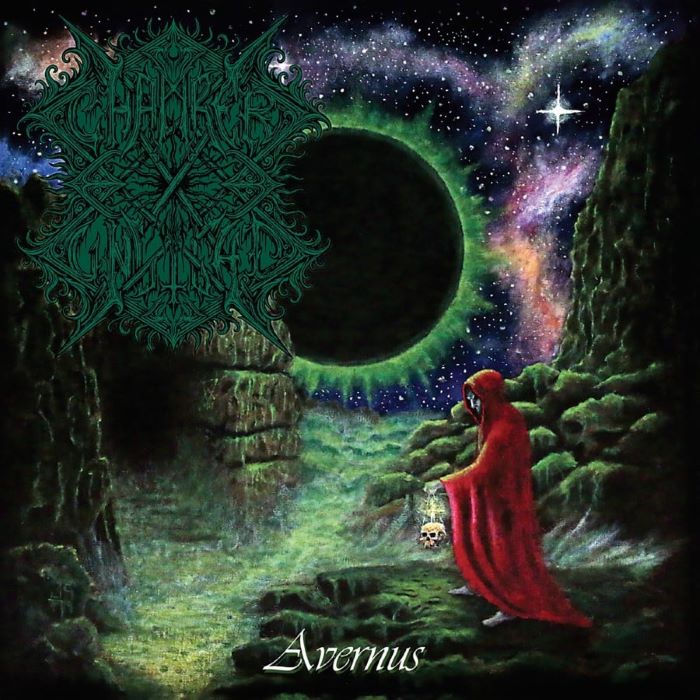 Chamber Of Unlight
(7.9)
Chamber Of Unlight
(7.9)
|
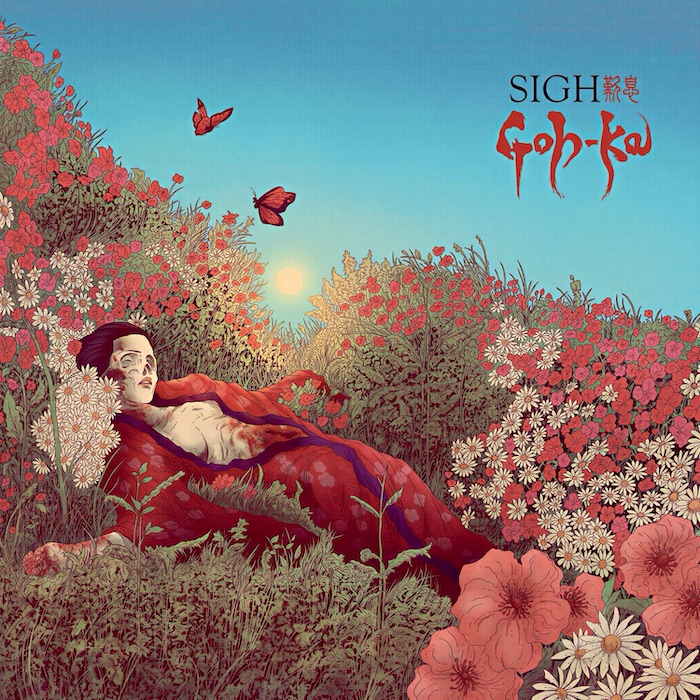 Sigh
(9)
Sigh
(9)
|